Chapel Petit Seminaire d’Ottawa
A distinctive circular landmark where modern architecture, luminous stained glass, and Ottawa’s Francophone educational history converge
-
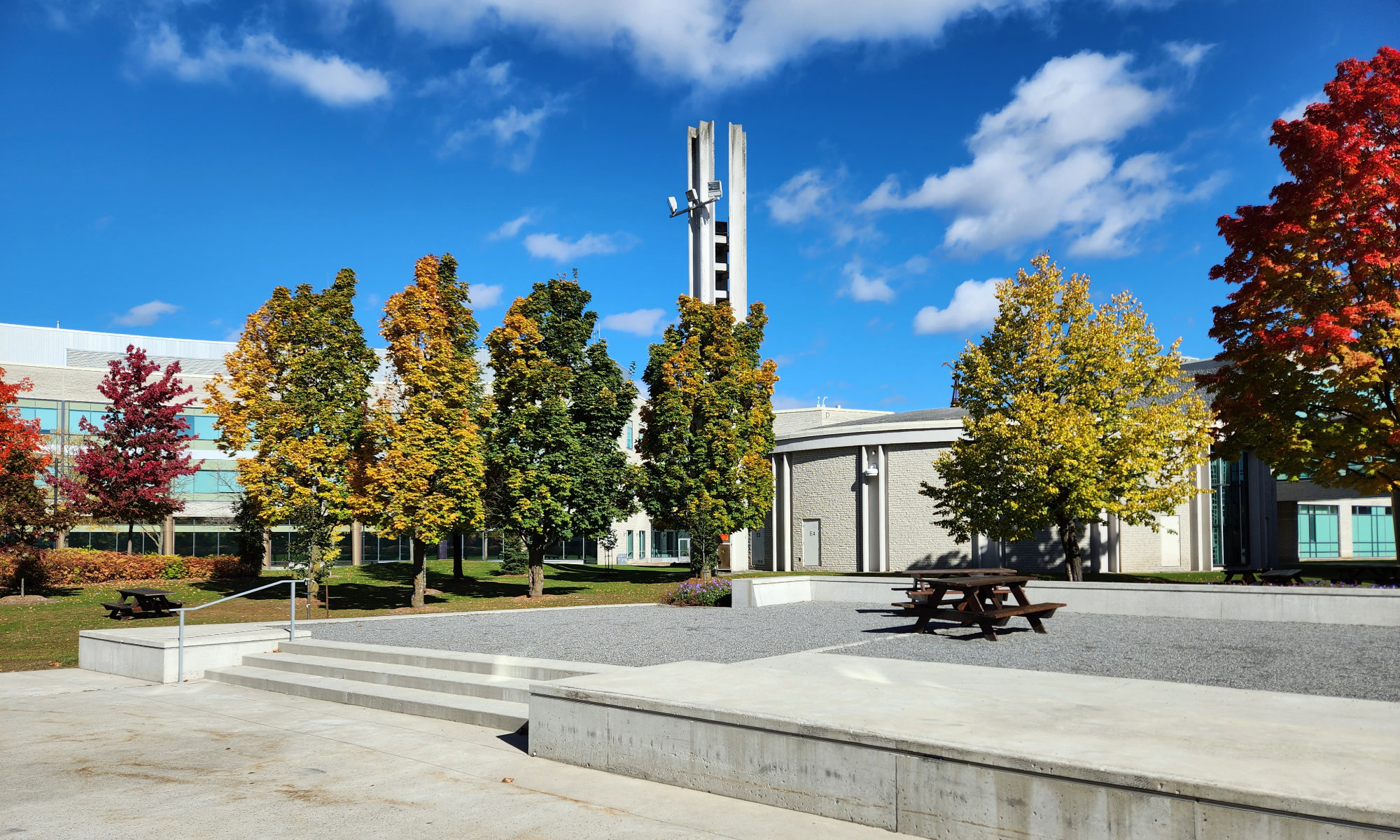
Overall view of the chapel and tower from the centre of the Le Cite Collegiale campus
-
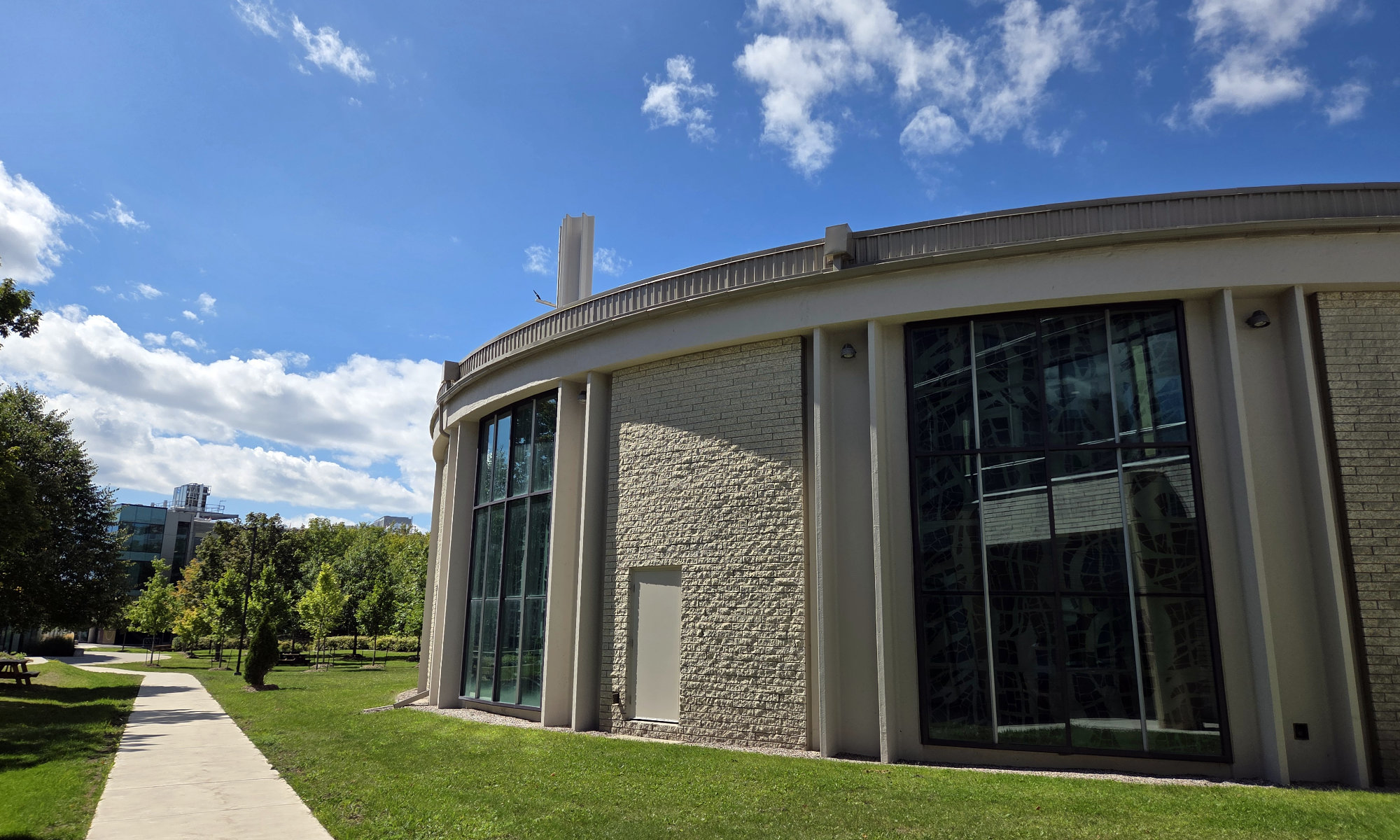
Approaching the chapel from the southeast
-
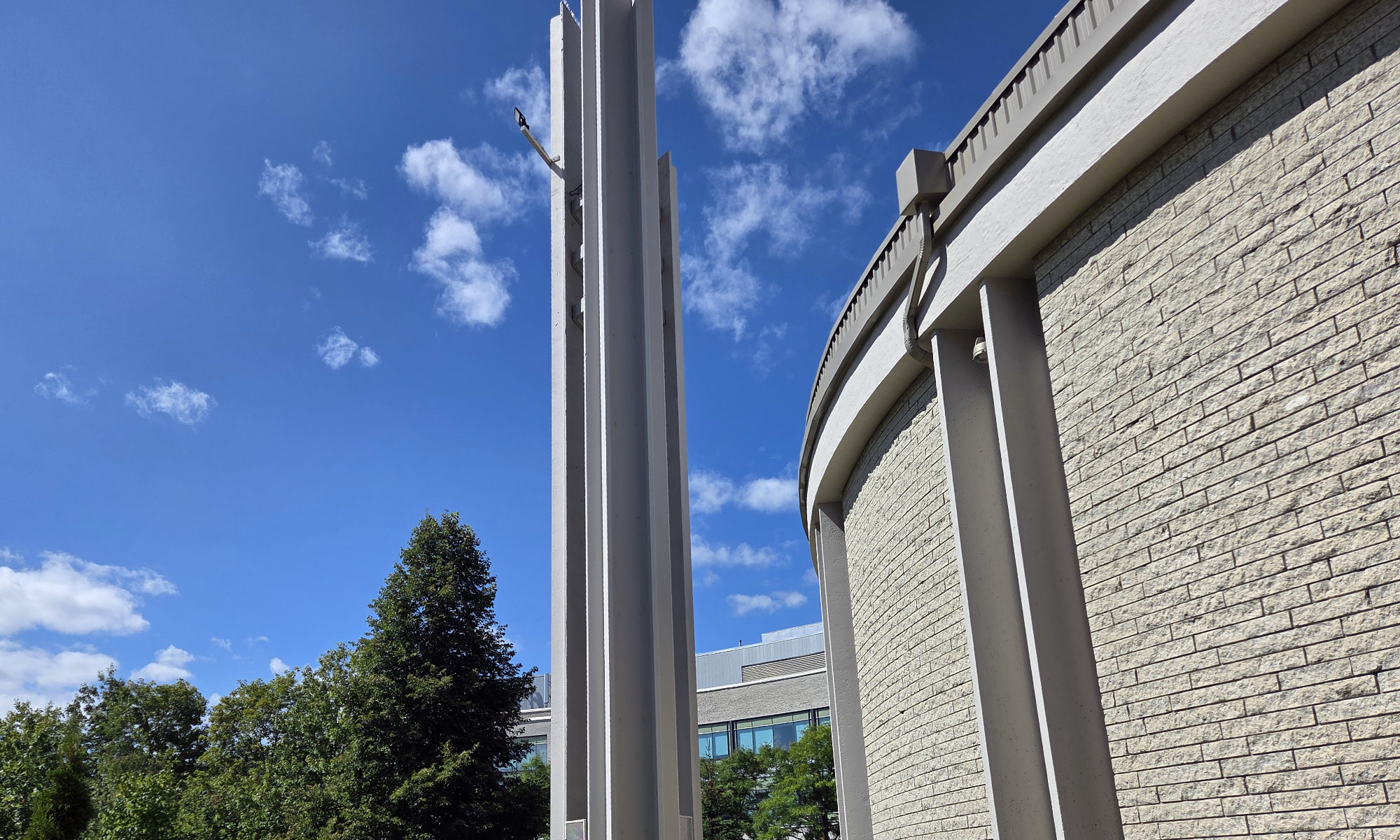
Positioning of the tower relative to the chapel
-
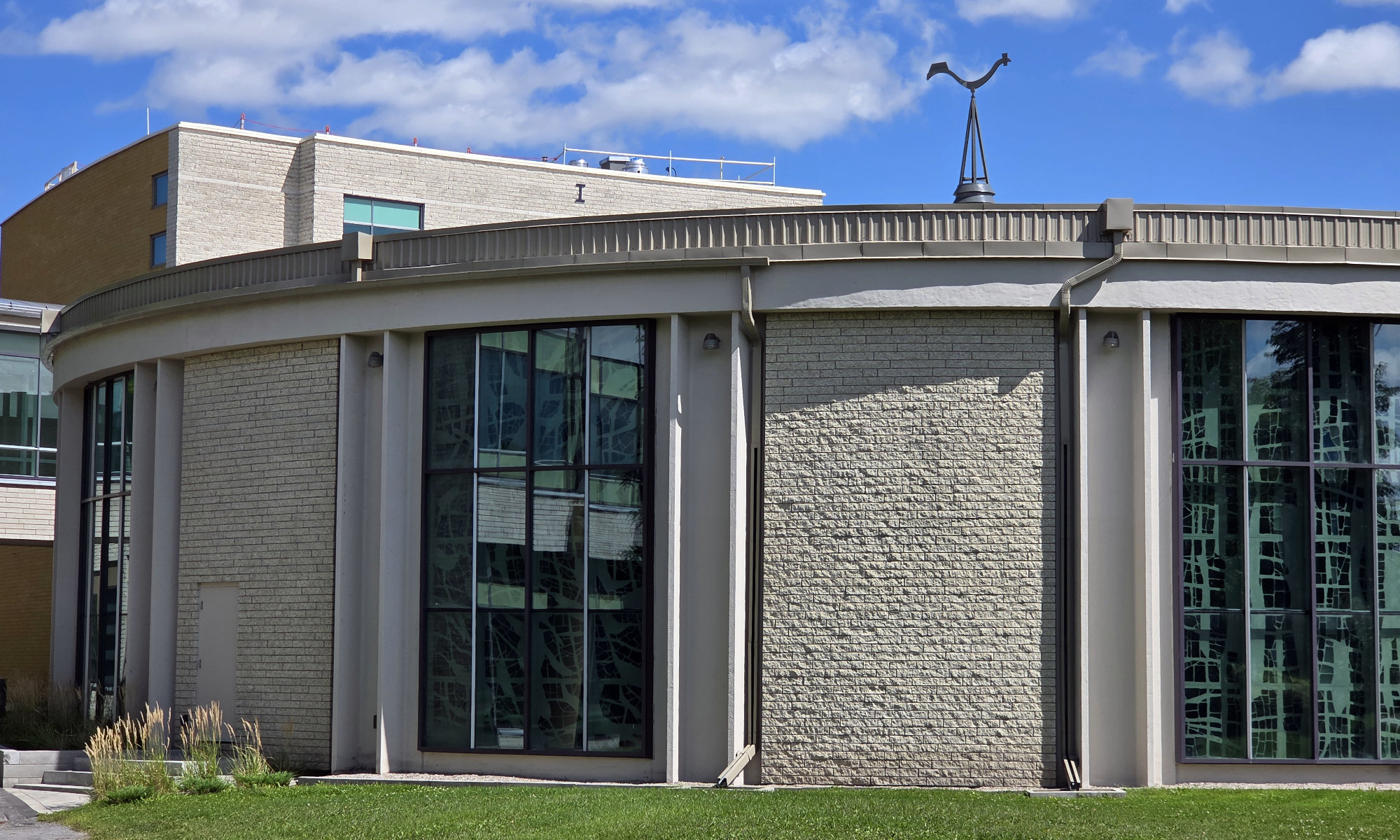
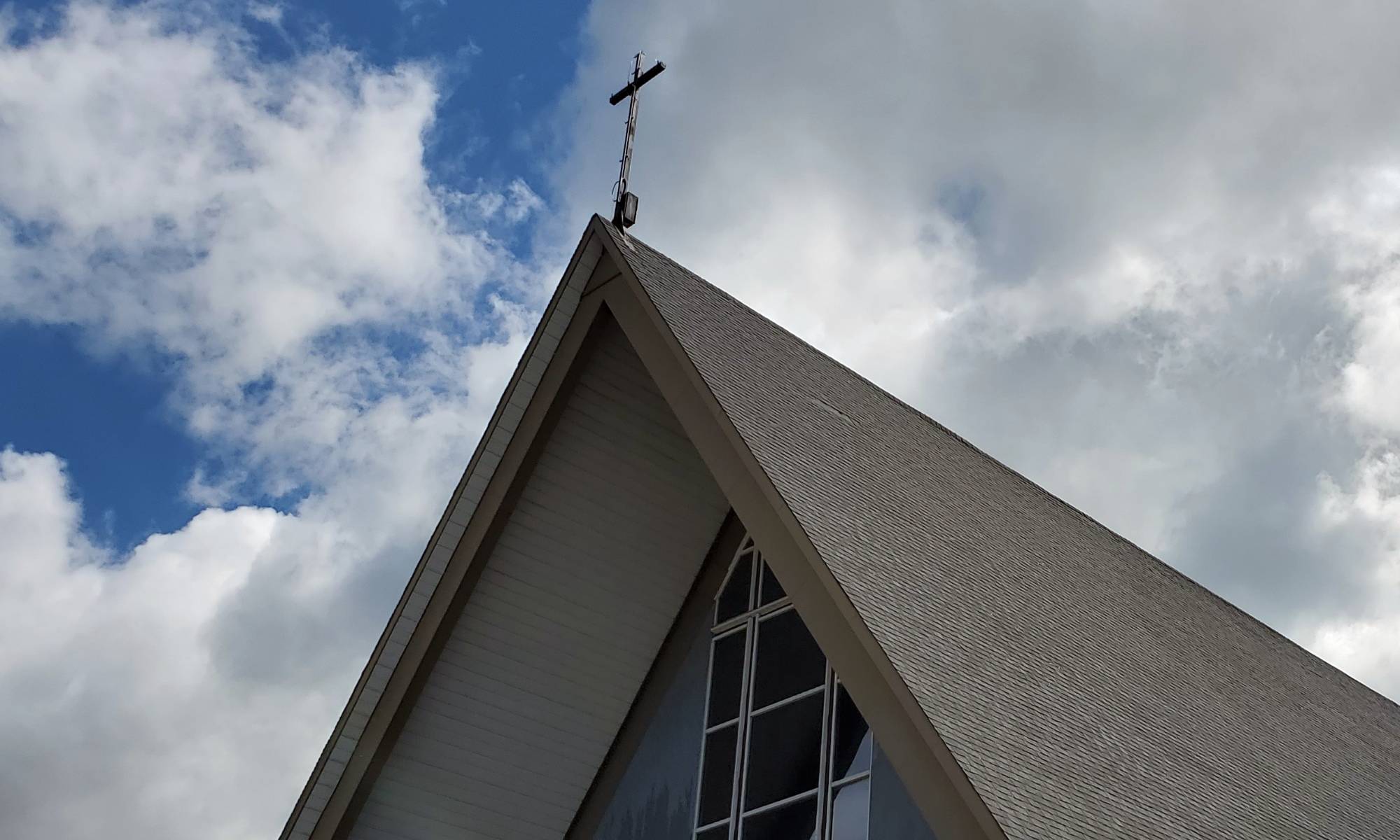
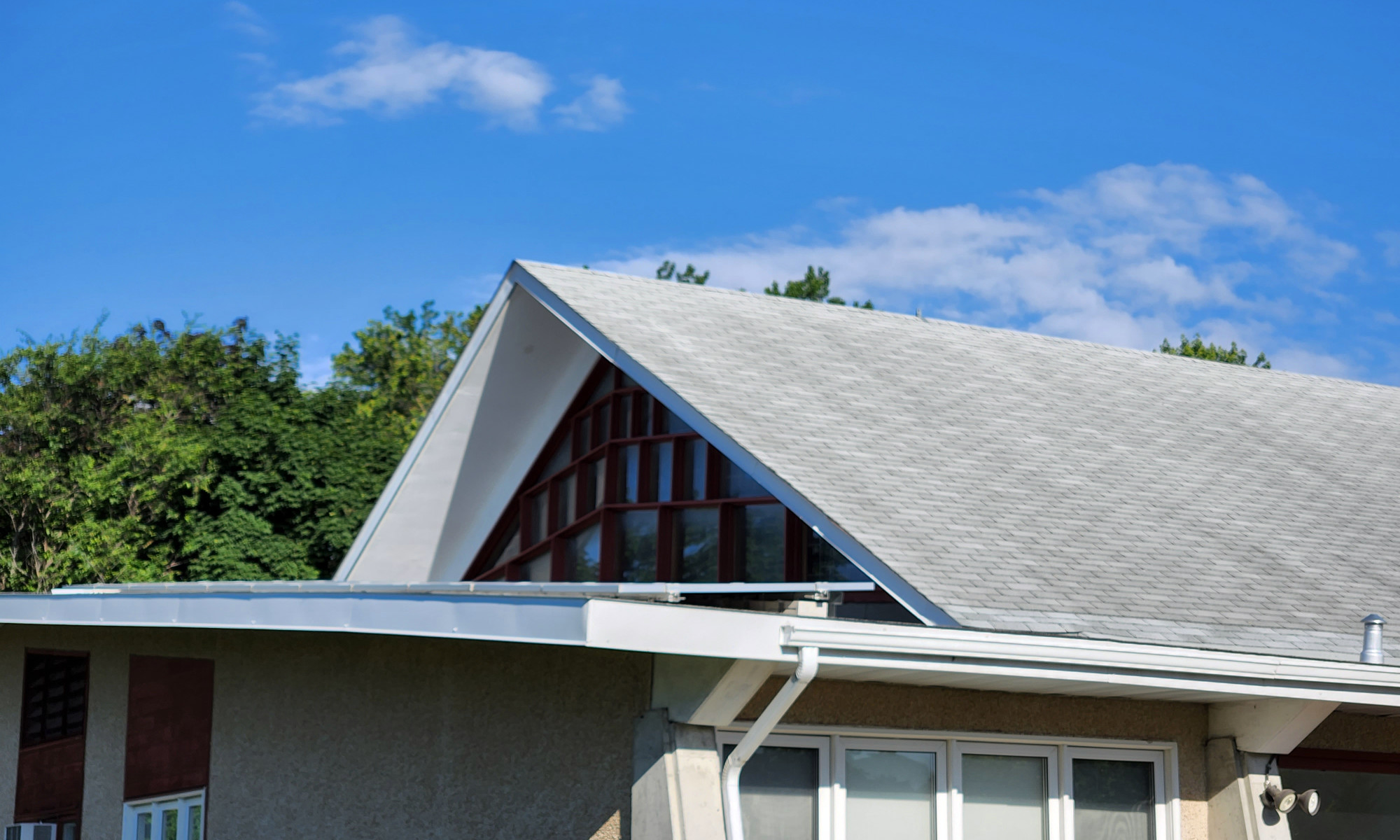
Looking toward the chapel with the roof ornament visible
-
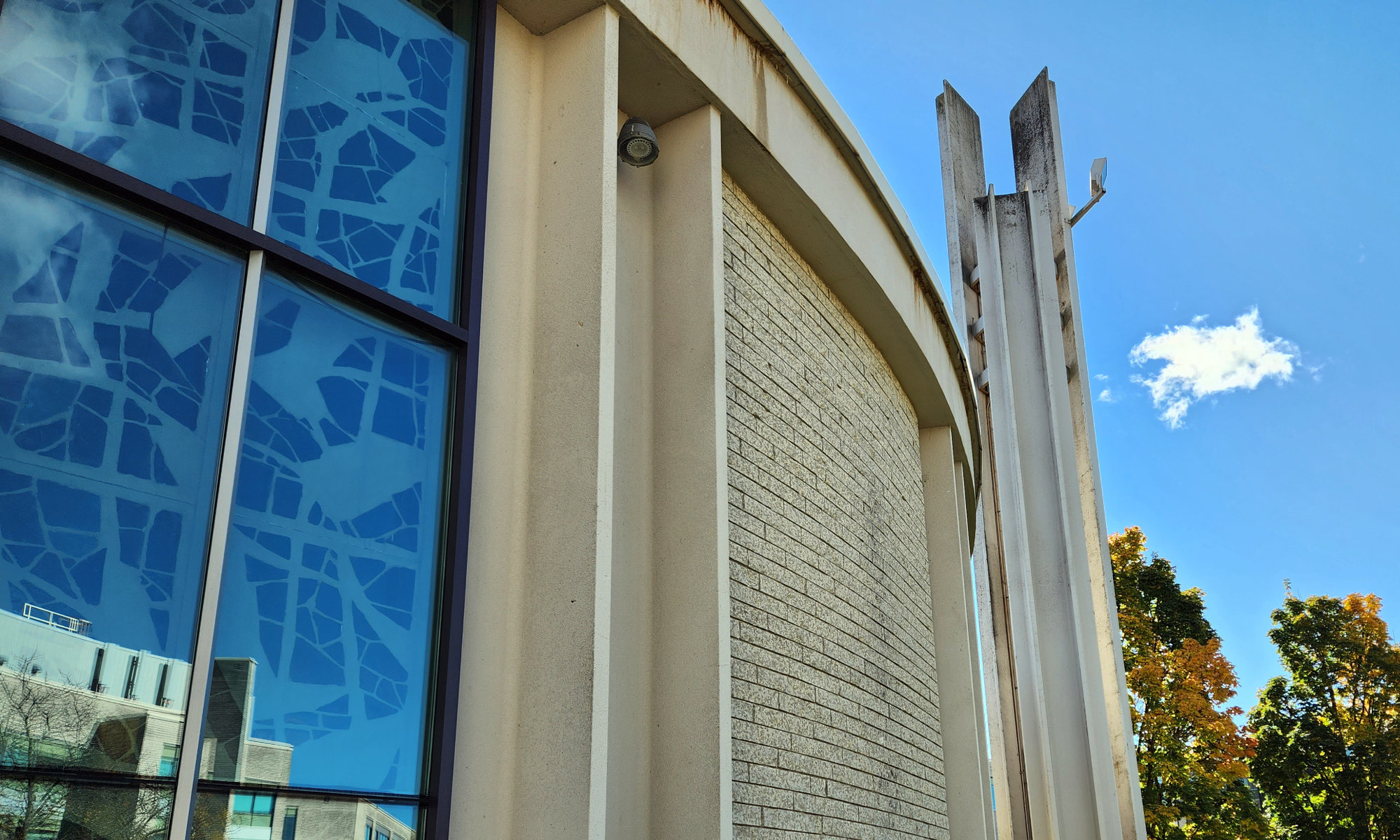
Looking northwest across the chapel towards the tower
-
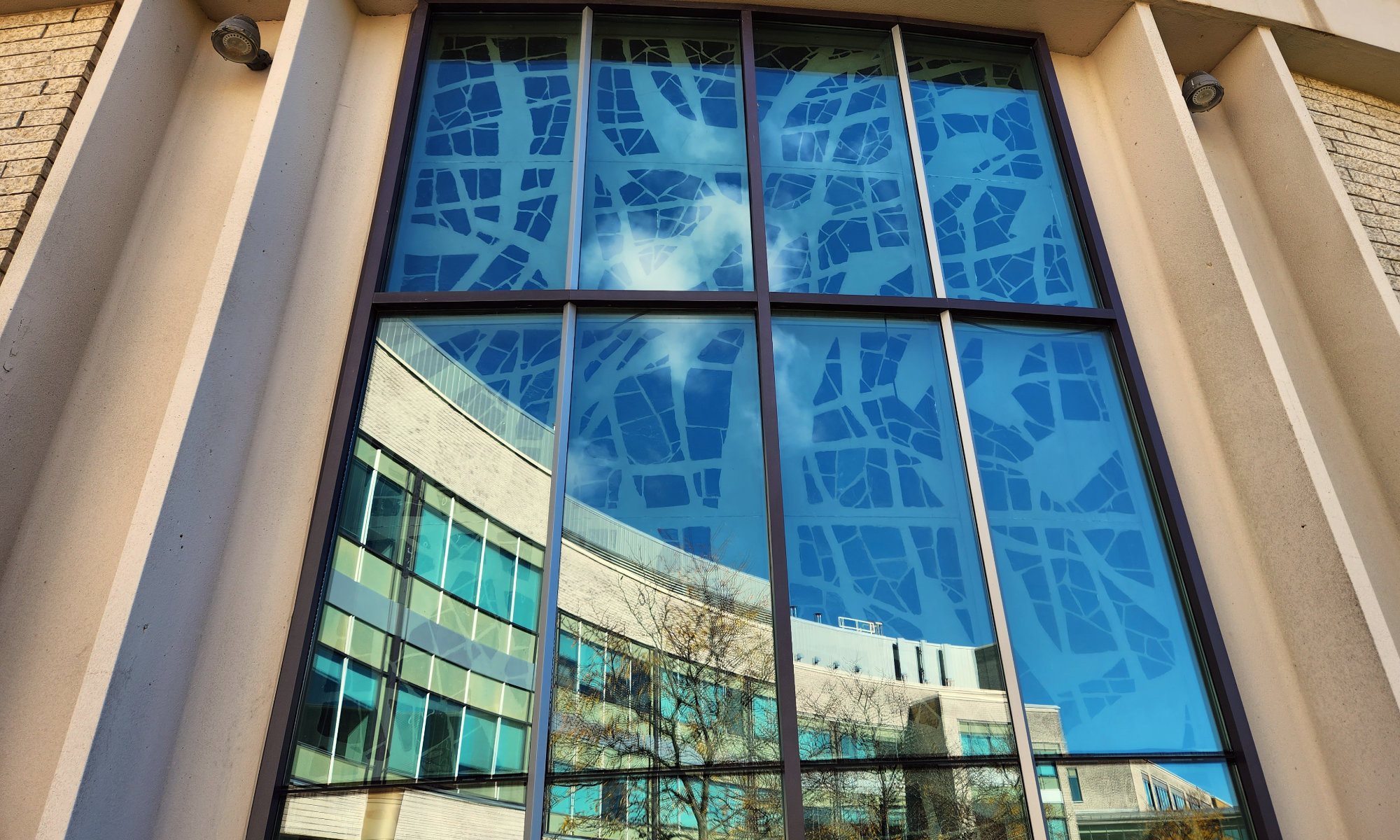
One of stained glass windows installed in 1965 that have been retained even in the new use
-
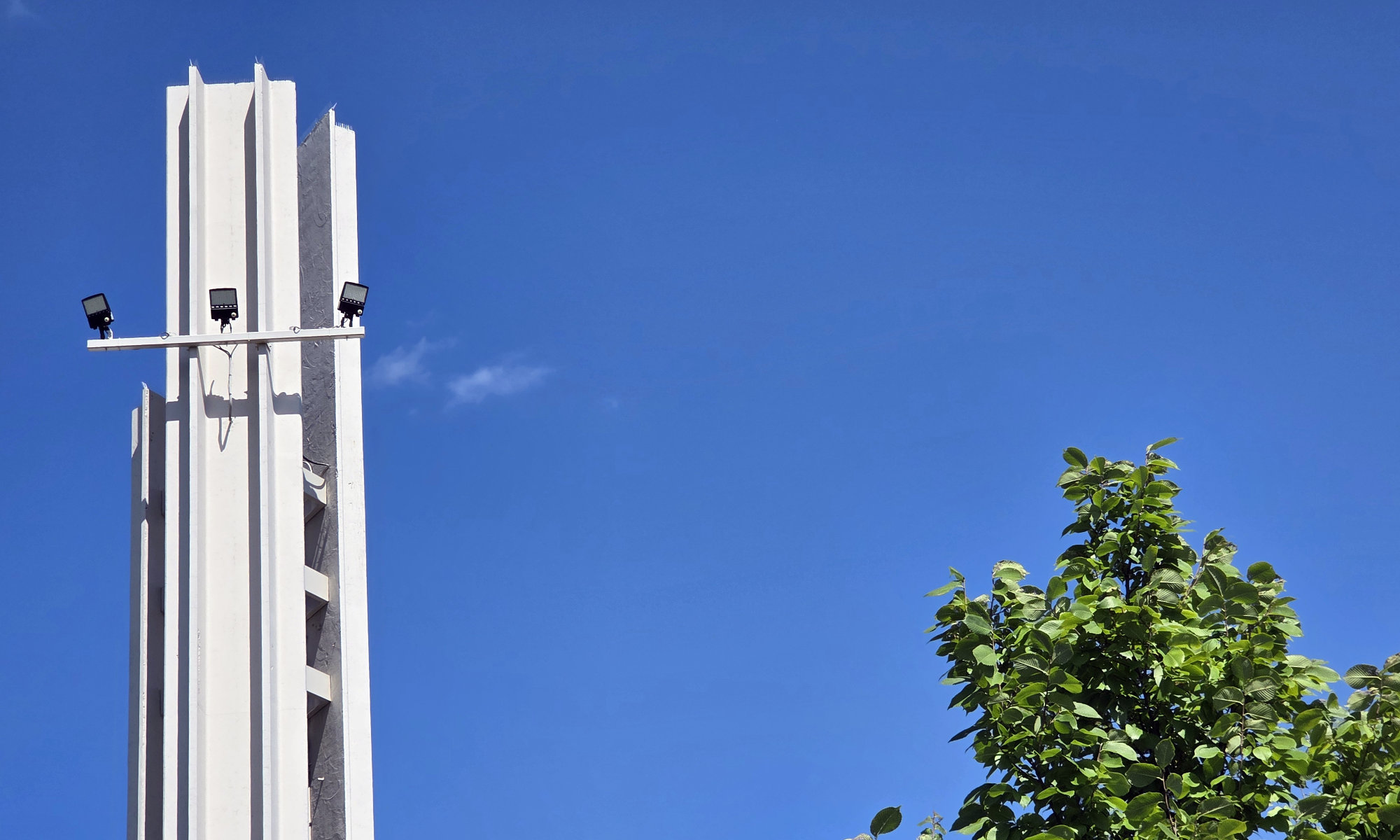
Tower against the sky
-
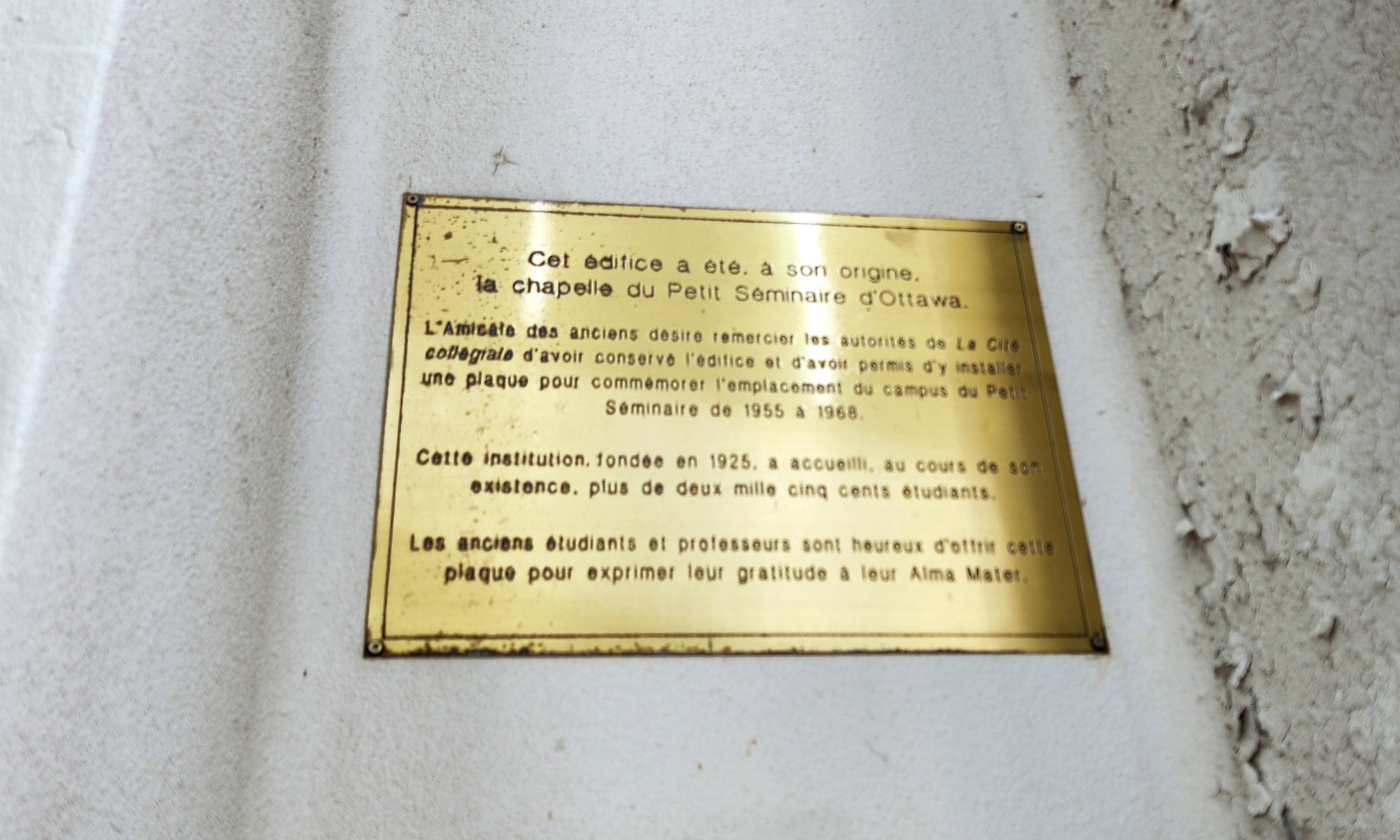
Small plaque highlighting the history of the Petit Seminaire on the chapel
As the only surviving building from the former Petit Séminaire d’Ottawa, the chapel is both an architectural landmark and a tangible record of the site’s enduring role in Ottawa’s Francophone institutional history. Constructed as part of the seminary campus developed between 1955 and 1958, it stands apart from the original complex’s straightforward, minimally ornamented blocks through its expressive circular form, largely concrete construction, and projecting vertical fins that frame the windows. The chapel’s principal ornament is concentrated in the decorative roof cap, the tower composed of separate L-shaped concrete elements, and the major stained-glass installation created by artist Henri Guérin in 1965. Its round plan also places it within a small but notable group of circular postwar religious buildings in Ottawa, including St. Basil’s Roman Catholic Church, designed by George Bemi with Tim Murray and interior designer Gerald Trottier.
The site has evolved through three successive educational and institutional uses while retaining a strong association with French-language learning. After the Petit Séminaire ceased operating as a seminary school in 1967 and later closed, the campus became the federal government’s Carson School of Languages. Most of the original buildings were removed when La Cité collégiale was constructed between 1993 and 1995, but the chapel was retained and adapted for a non-religious use. Its basic form and Henri Guérin stained glass were preserved, while stone cladding was added between the windows to relate the building to the new campus architecture.
Within the redeveloped campus, the chapel occupies a prominent position at the eastern end of a circular courtyard, just inside the raised connecting walkway. Its round plan informed the courtyard’s geometry and helped establish the landscaped heart of La Cité collégiale. Originally built in a sparsely developed institutional setting near the National Research Council, the chapel now anchors a denser educational campus. Its survival embodies the site’s continuing contribution to Ottawa’s Francophone history, linking religious education, federal language training, and post-secondary French-language education across successive generations.