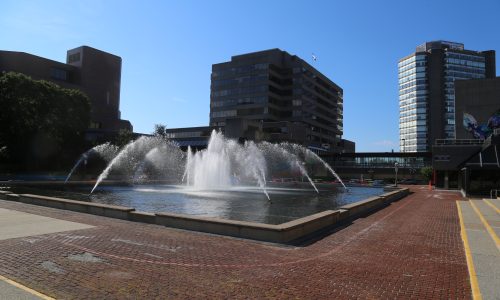
Parc du Portage
Acting as a forecourt for both the Maison du Citoyen and Place du Portage I and II, this landscape is a key landscape in Old Hull
-
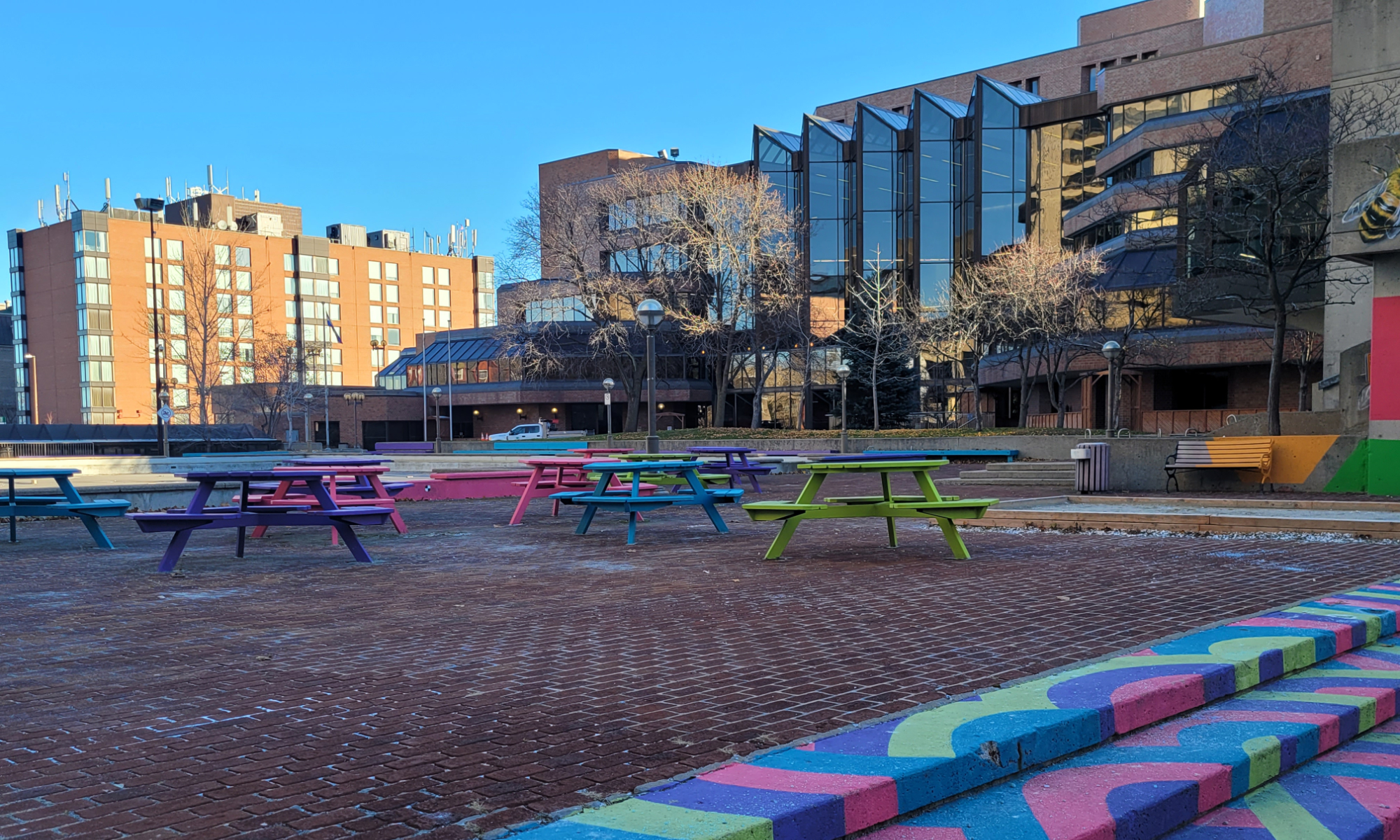
Looking east highlighting the presence of the Maison du Citoyen along the eastern edge of the park
-
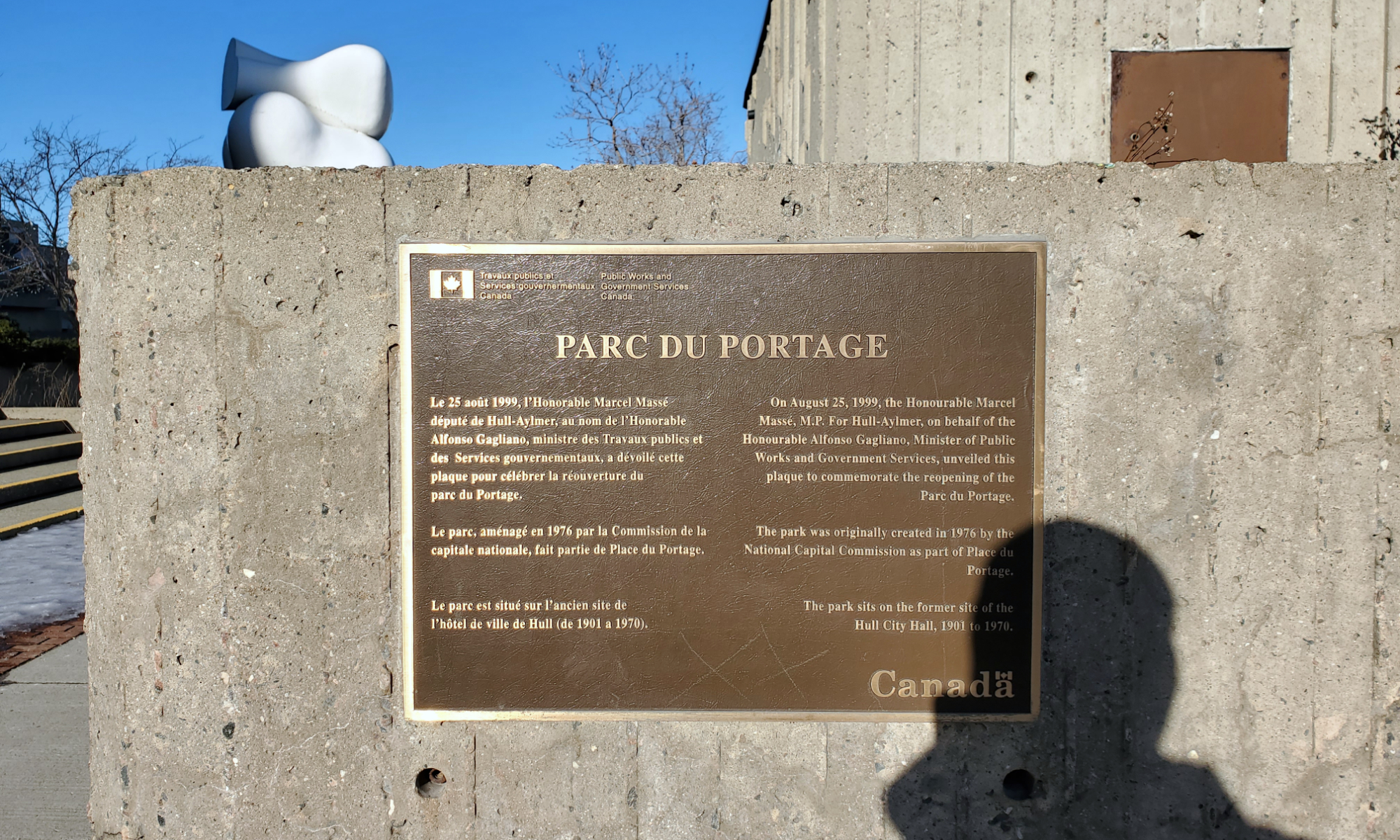
Plaque unveiled to commemorate the 1999 rehabilitation of the Park
-
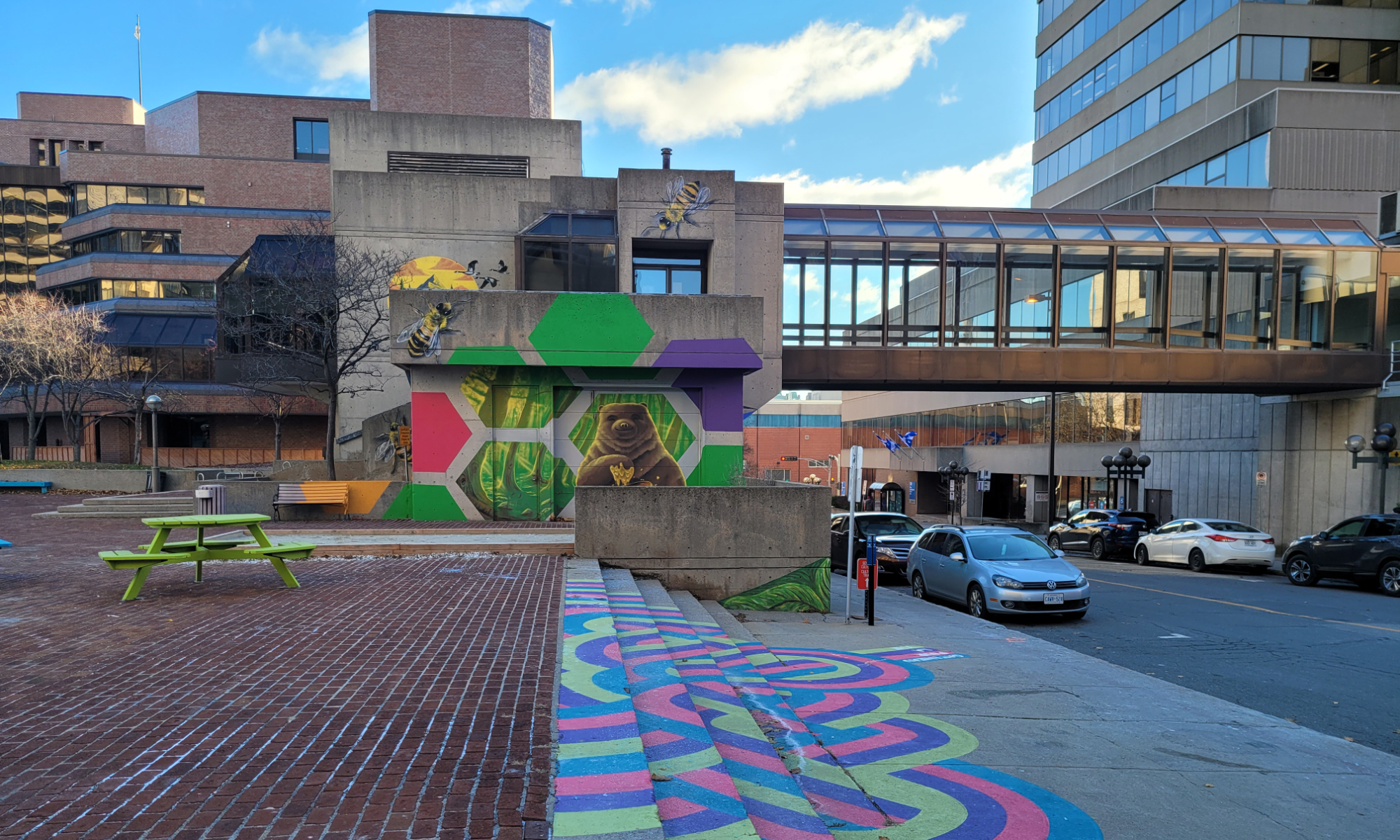
South edge of the park abutting rue l'Hotel-de-Ville
-
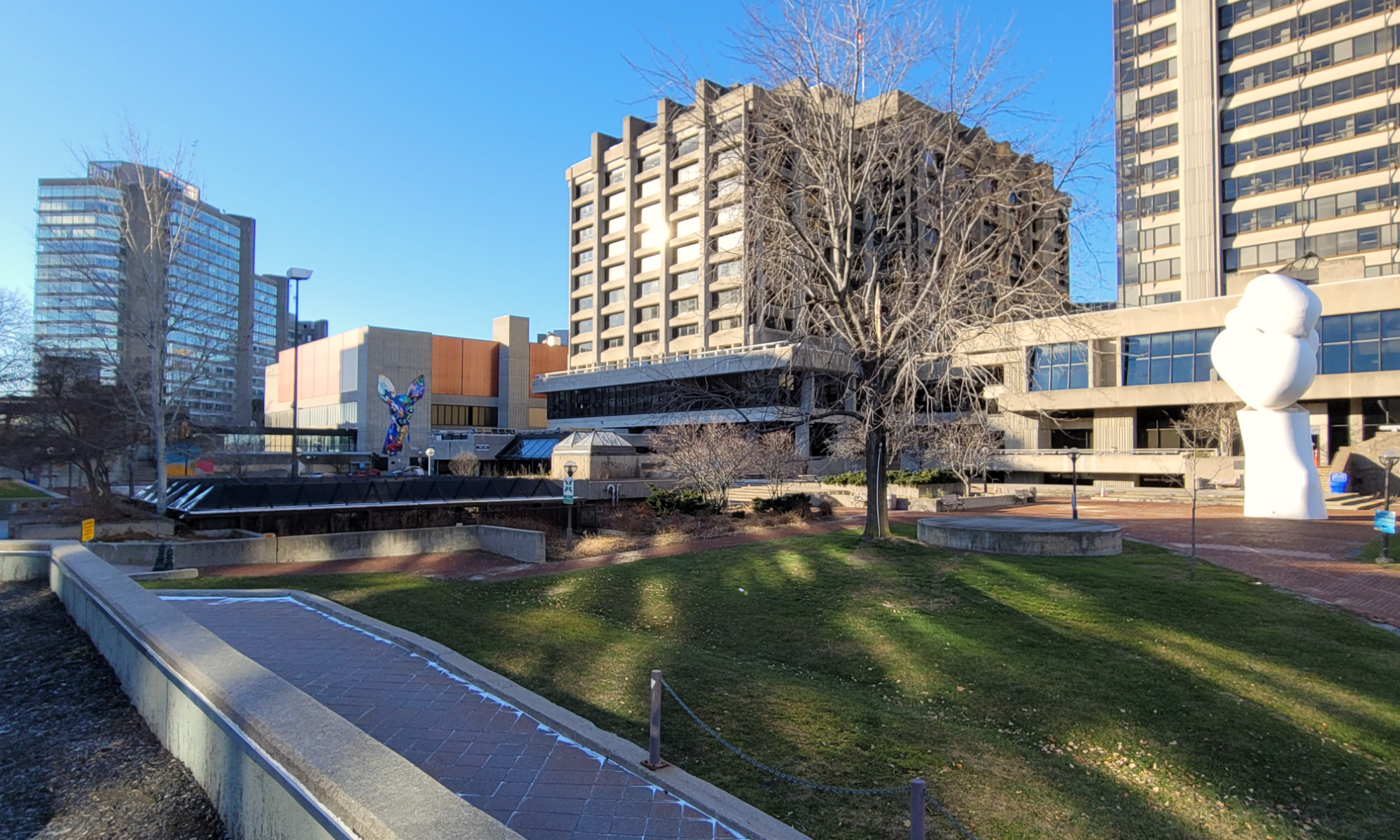
Looking southwest across the park
-
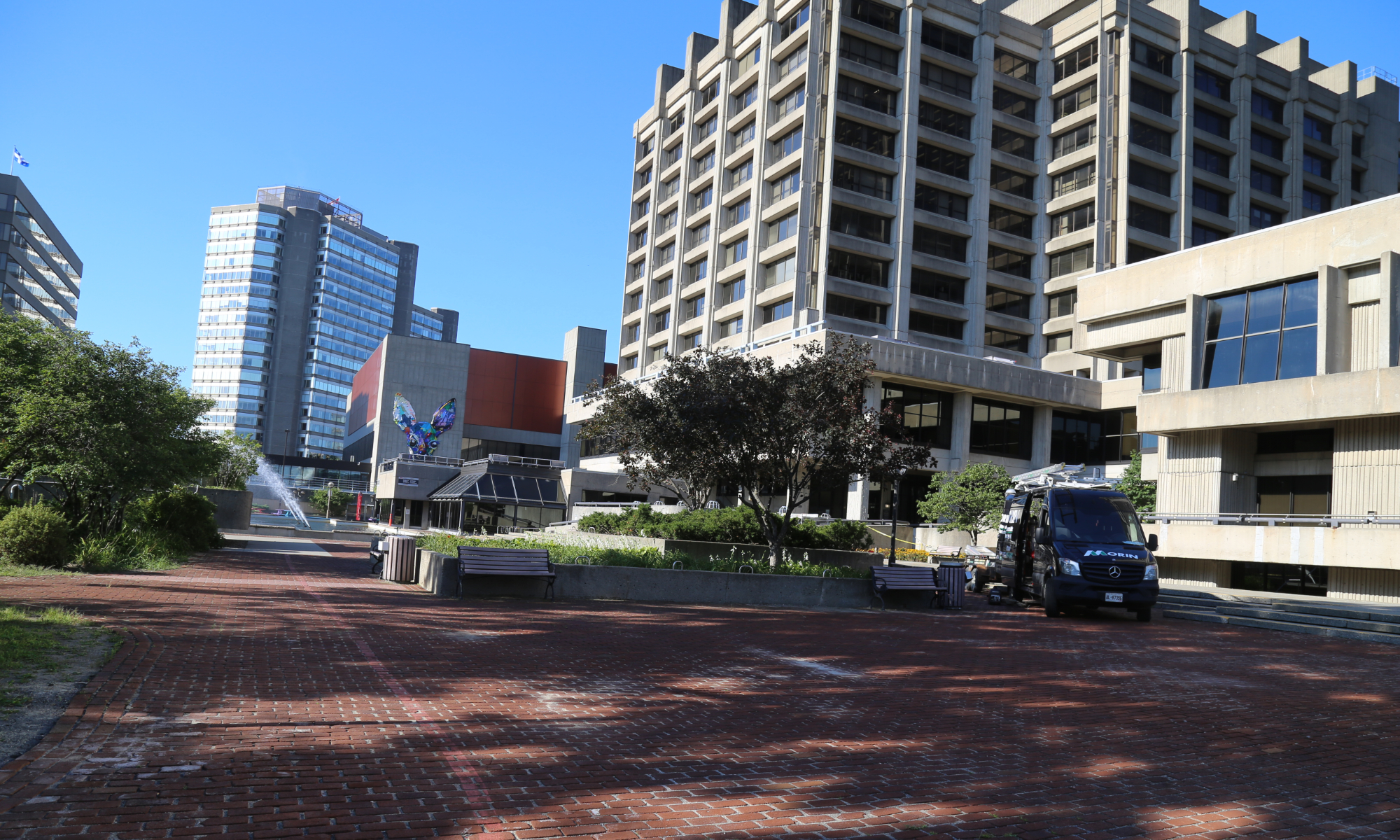
Looking south across the park from the northern landscaped area
-
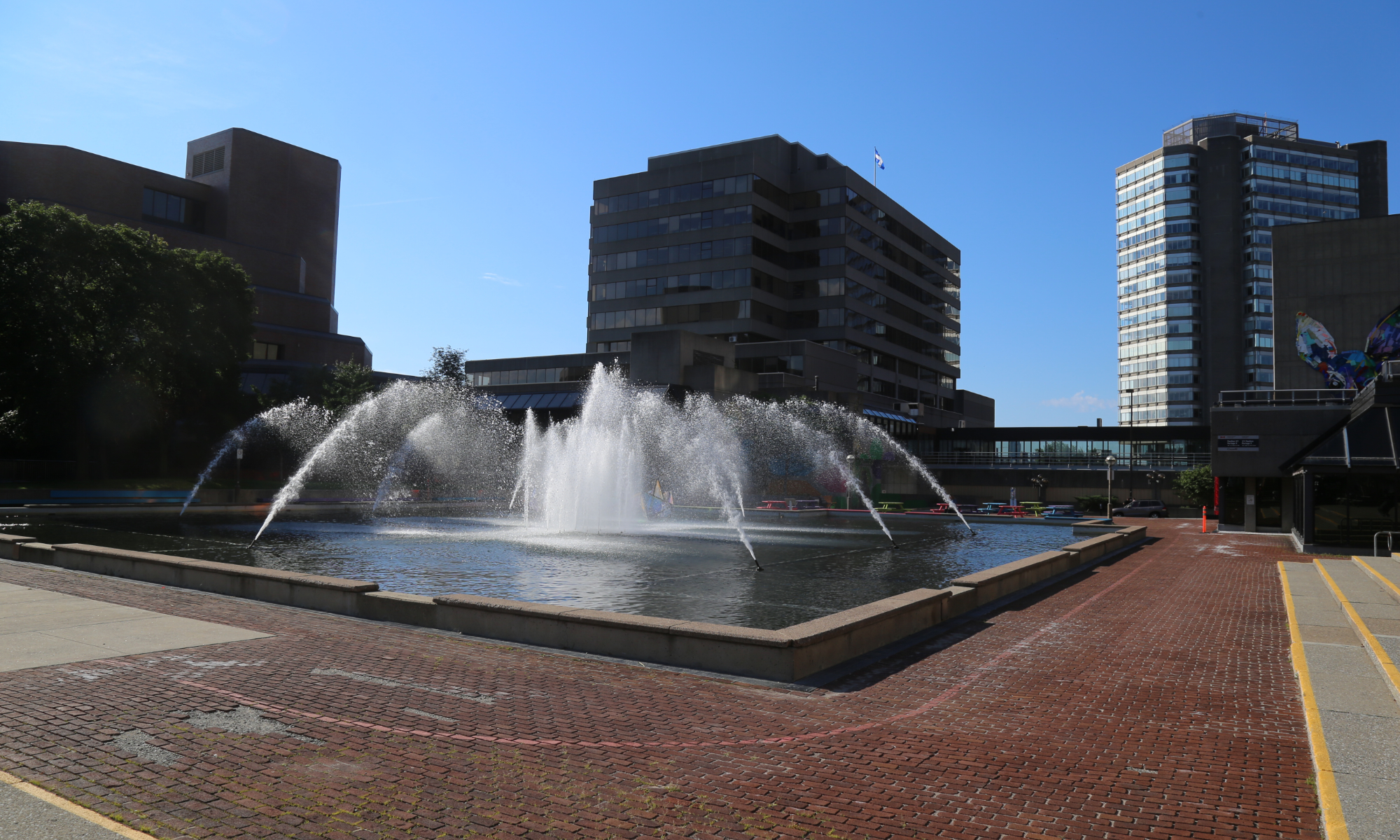
The fountain
-
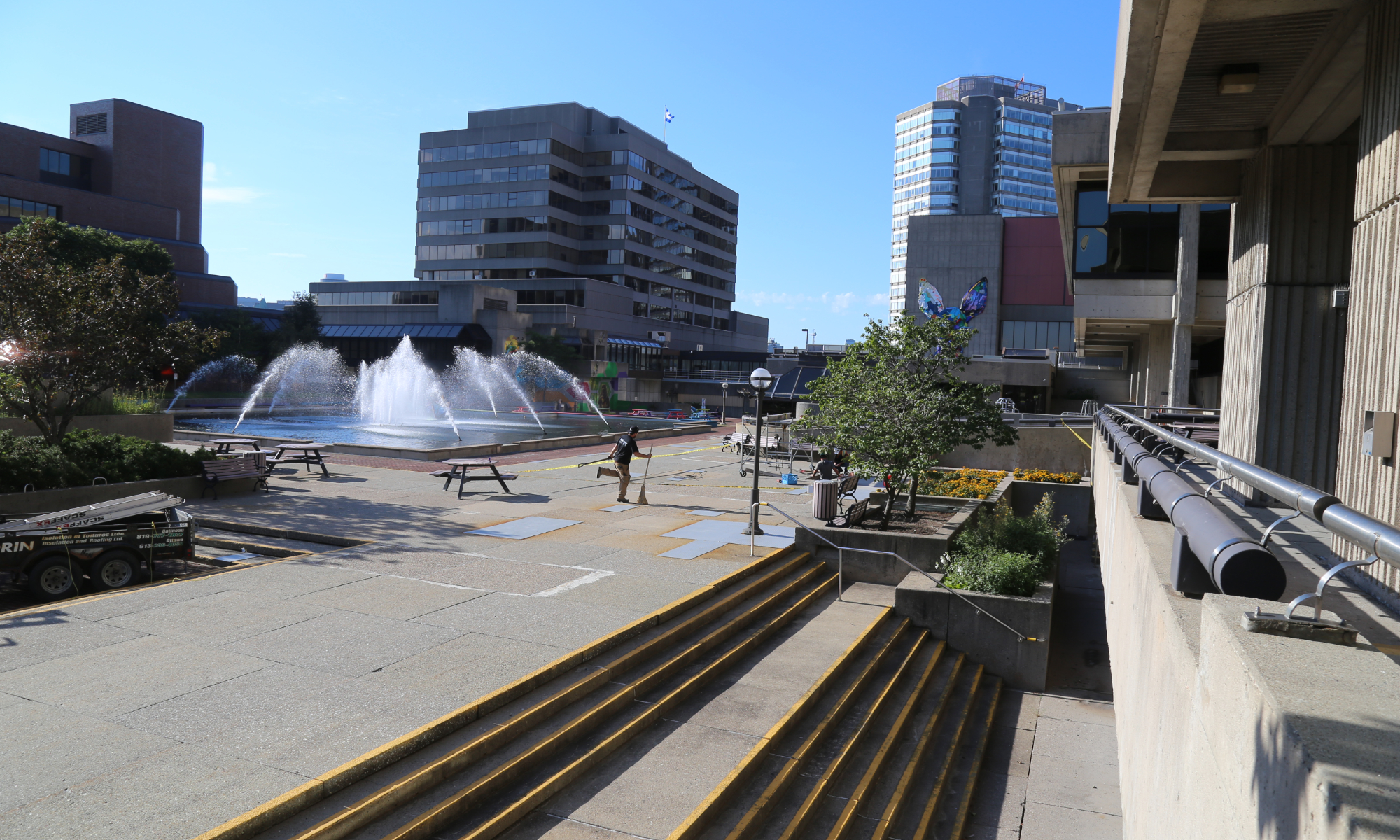
Looking south across the park with Place du Portage I to the right
-
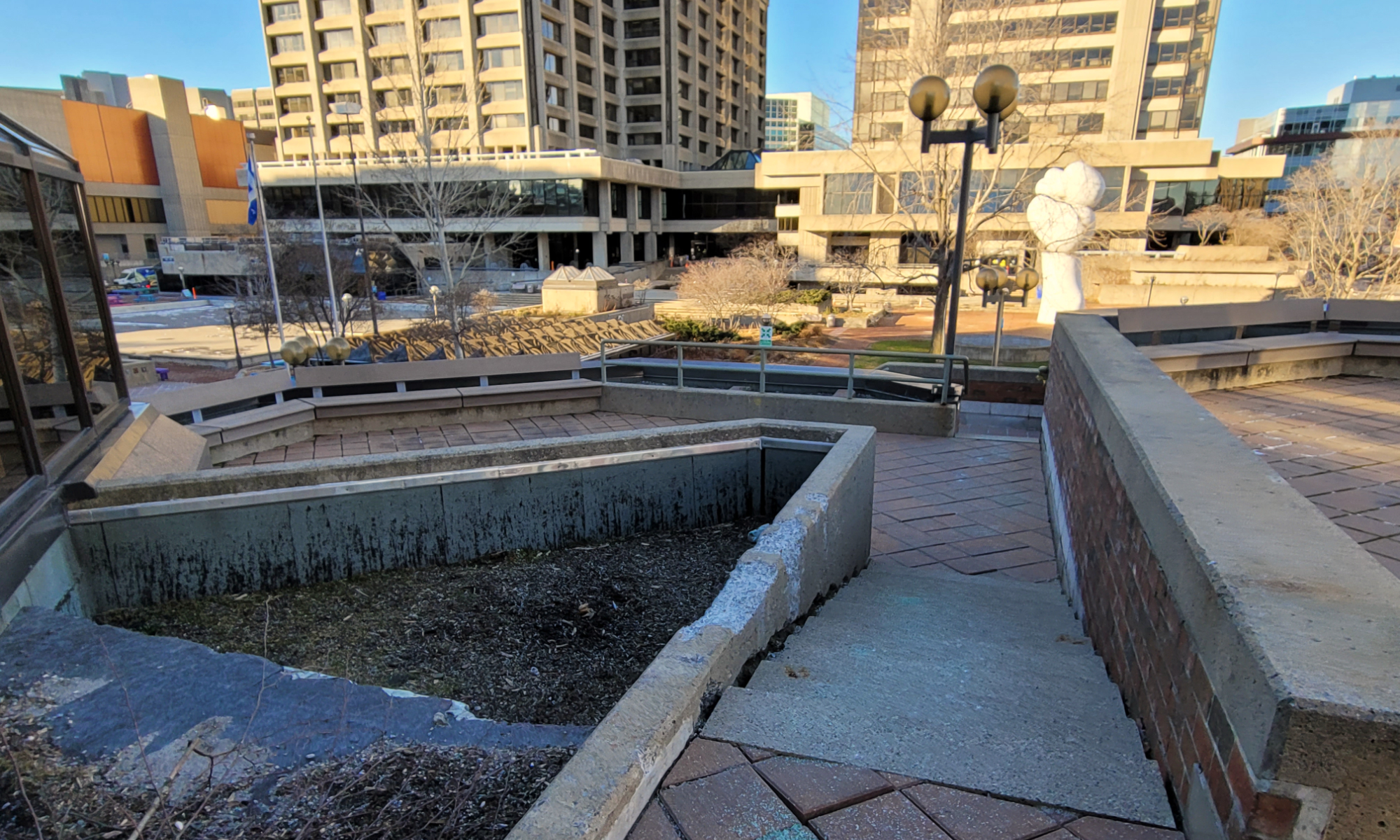
Looking west from the terraces at the foot of the Maison du Citoyen
-
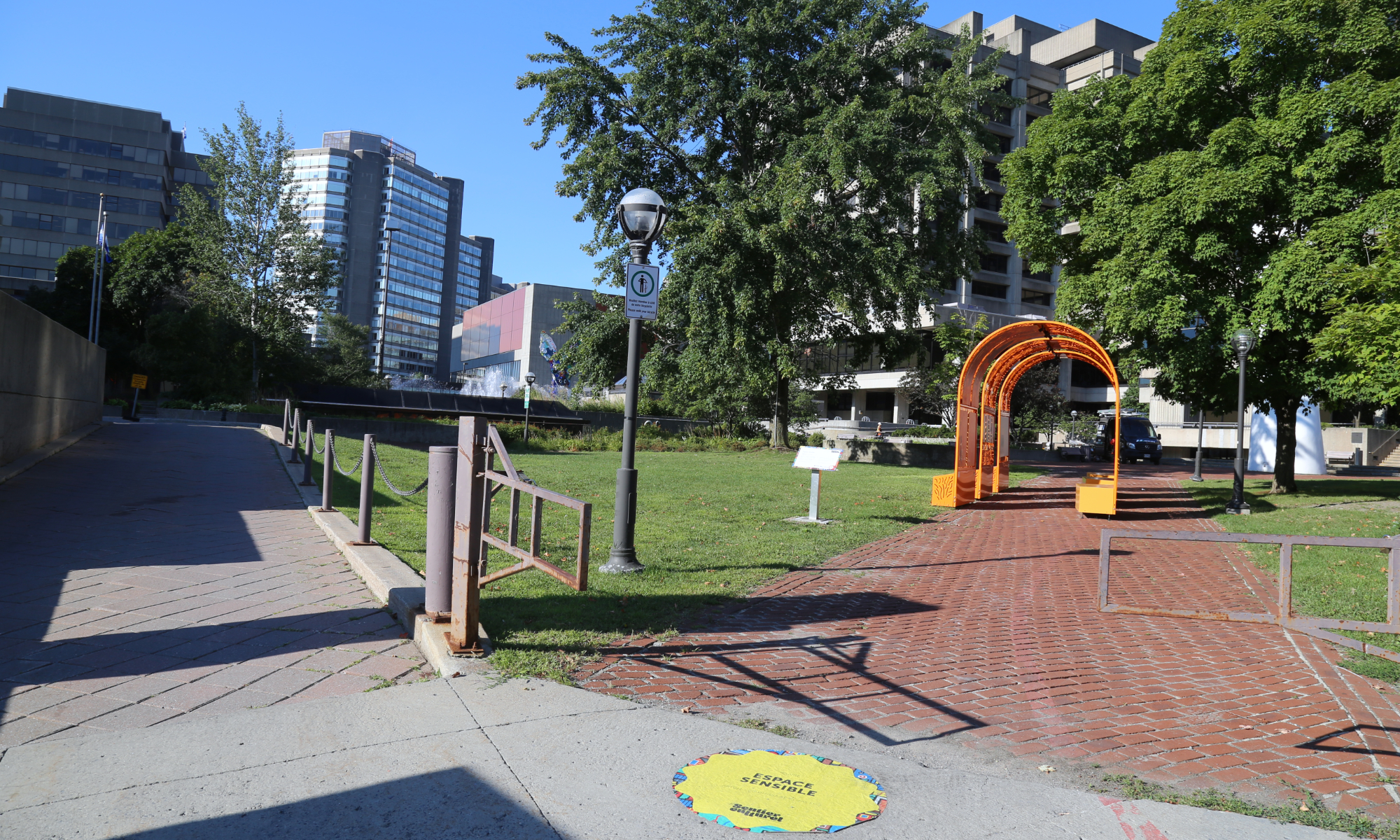
Looking south across the park from the northern landscaped area
-
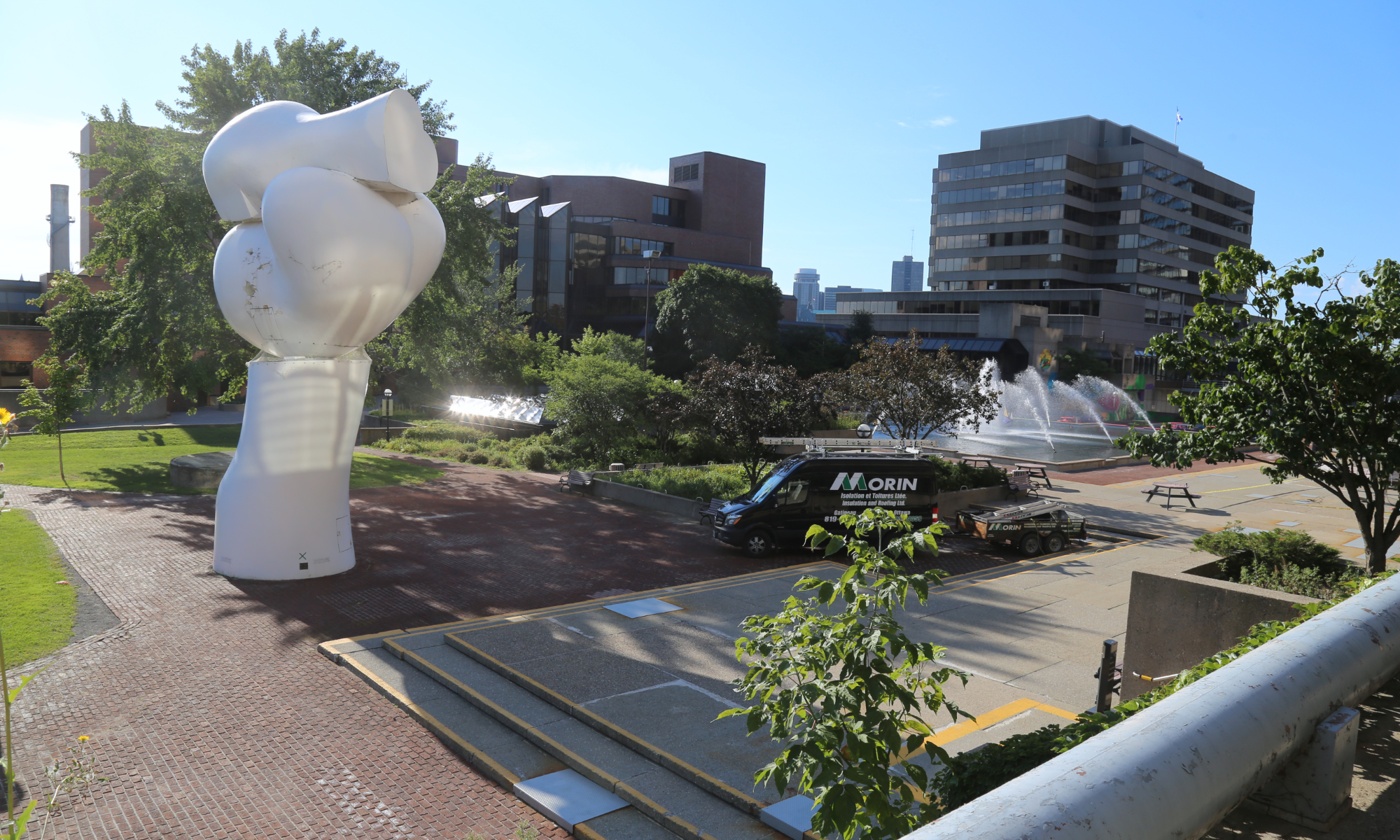
Looking southeast across the park
-
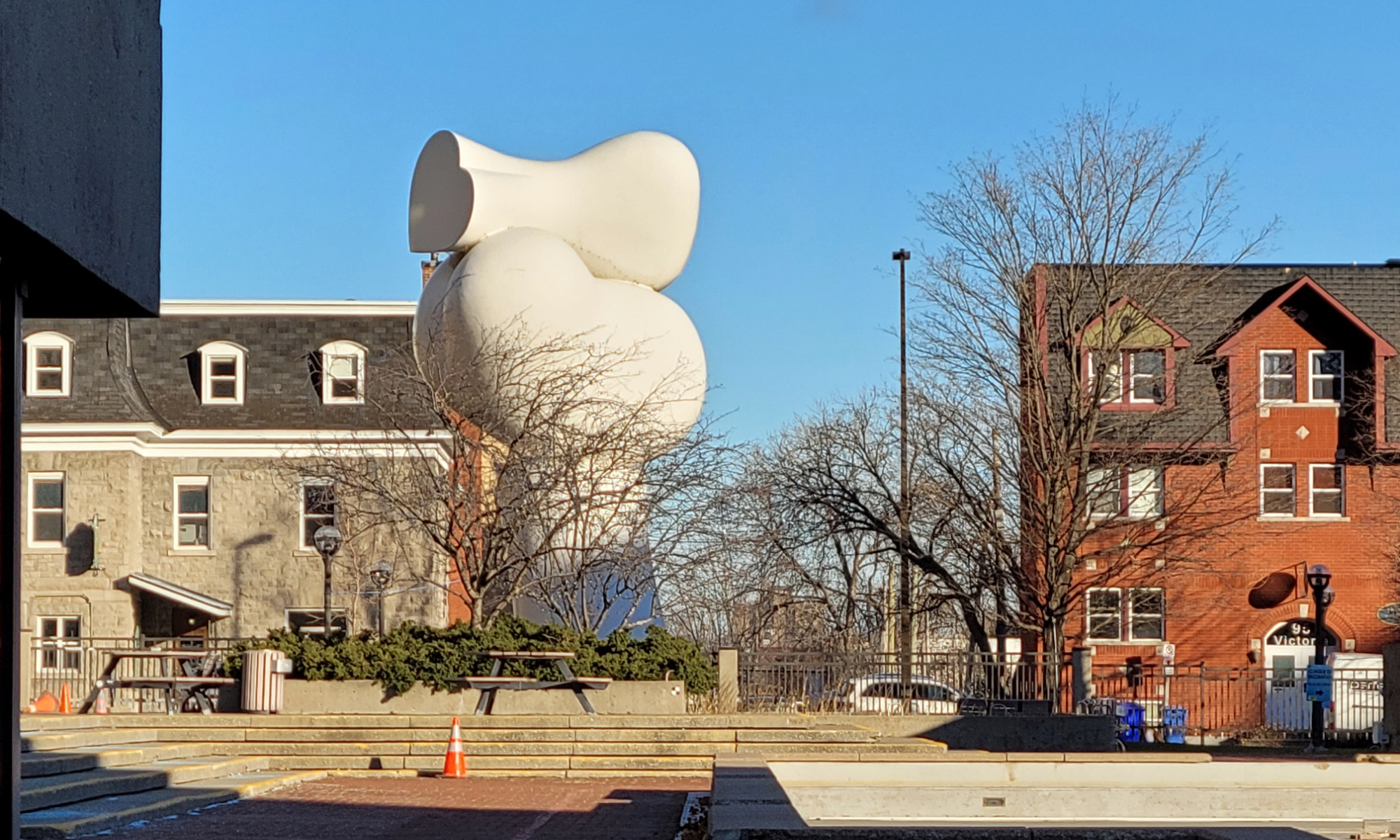
l'Amour sculpture situated at the north end of the park.
165 Rue de l'Hôtel-de-Ville, Gatineau, QC
Gatineau
Landscape
Daniel Lazosky
1976
Parc du Portage is a central civic landscape in Gatineau with a layered and sometimes complicated history closely tied to the major urban renewal efforts of the 1970s in the former Ville de Hull. The park occupies one of the city’s most significant civic sites, positioned between major federal and municipal complexes and framed by Place du Portage I and II as well as the Maison du Citoyen. Even before its original construction was complete, the park’s design began to evolve to acknowledge the emerging presence of the Maison du Citoyen on the block, reinforcing its role as a shared civic foreground rather than a residual open space. Organized as a series of distinct zones, the park is bordered to the east and west by raised terraces associated with adjacent buildings, creating strong edges that both define and contain the public realm while reinforcing the monumental character of the surrounding architecture.
The design is anchored by two dominant elements: a large central fountain—once animated year‑round by doubling as a skating rink in winter—and the prominent L’Amour sculpture (Henry Wanton Jones, 1975), which acts as a visual and symbolic focal point within the park. Material finishes are robust and civic in nature, relying on hardscape surfaces, concrete, stone, and terraced planters that respond to the structural realities of the site. The park sits atop an underground parking garage, a condition that significantly constrains landscaping opportunities and limits the ability of the ground plane to support large trees outside of raised planters. This structural dependency also presents long‑term challenges, as the aging condition of the garage complicates future renewal efforts. With the elimination of winter skating, the park has lost an important seasonal use, reducing its relevance during colder months and raising questions about its evolving role. Today, Parc du Portage functions primarily as a civic square for the Maison du Citoyen—an open, ceremonial space shaped as much by infrastructure and history as by landscape design.
Le parc du Portage est un paysage civique central à Gatineau, marqué par une histoire complexe étroitement liée aux importants efforts de renouvellement urbain des années 1970 dans l’ancienne ville de Hull. Le parc occupe l’un des sites civiques les plus significatifs de la ville, situé entre de grands ensembles fédéraux et municipaux et encadré par Place du Portage I et II ainsi que par la Maison du Citoyen. Avant même l’achèvement de son aménagement initial, la conception du parc a commencé à évoluer afin de reconnaître la nouvelle présence de la Maison du Citoyen sur l’îlot, renforçant ainsi son rôle d’avant‑plan civique partagé plutôt que celui d’un simple espace ouvert résiduel. Organisé en une série de zones distinctes, le parc est bordé à l’est et à l’ouest par des terrasses surélevées associées aux bâtiments adjacents, créant des limites fortes qui définissent et structurent l’espace public tout en soulignant le caractère monumental du cadre bâti environnant.
La composition du parc est structurée autour de deux éléments majeurs : une grande fontaine centrale — autrefois animée toute l’année en servant également de patinoire en hiver — et la sculpture emblématique L’Amour, qui agit comme point focal visuel et symbolique. Les matériaux employés sont robustes et d’expression civique, faisant largement appel aux surfaces minérales, au béton, à la pierre et aux jardinières en terrasses, en réponse aux contraintes structurelles du site. Le parc repose sur un stationnement souterrain, une condition qui limite considérablement les possibilités d’aménagement paysager et la capacité du sol à soutenir de grands arbres en dehors des bacs et terrasses plantées. Cette dépendance à l’infrastructure pose également des défis à long terme, alors que l’état du stationnement continue de se détériorer et complique toute intervention future. L’élimination de l’usage hivernal de la patinoire a par ailleurs réduit la pertinence du parc durant la saison froide. Aujourd’hui, le parc du Portage fonctionne principalement comme une place civique pour la Maison du Citoyen : un espace ouvert et cérémoniel, façonné autant par son infrastructure et son histoire que par son aménagement paysager.