
National Research Council Building M-54
A restrained modernist composition, quietly enlivened by expressive concrete forms
-
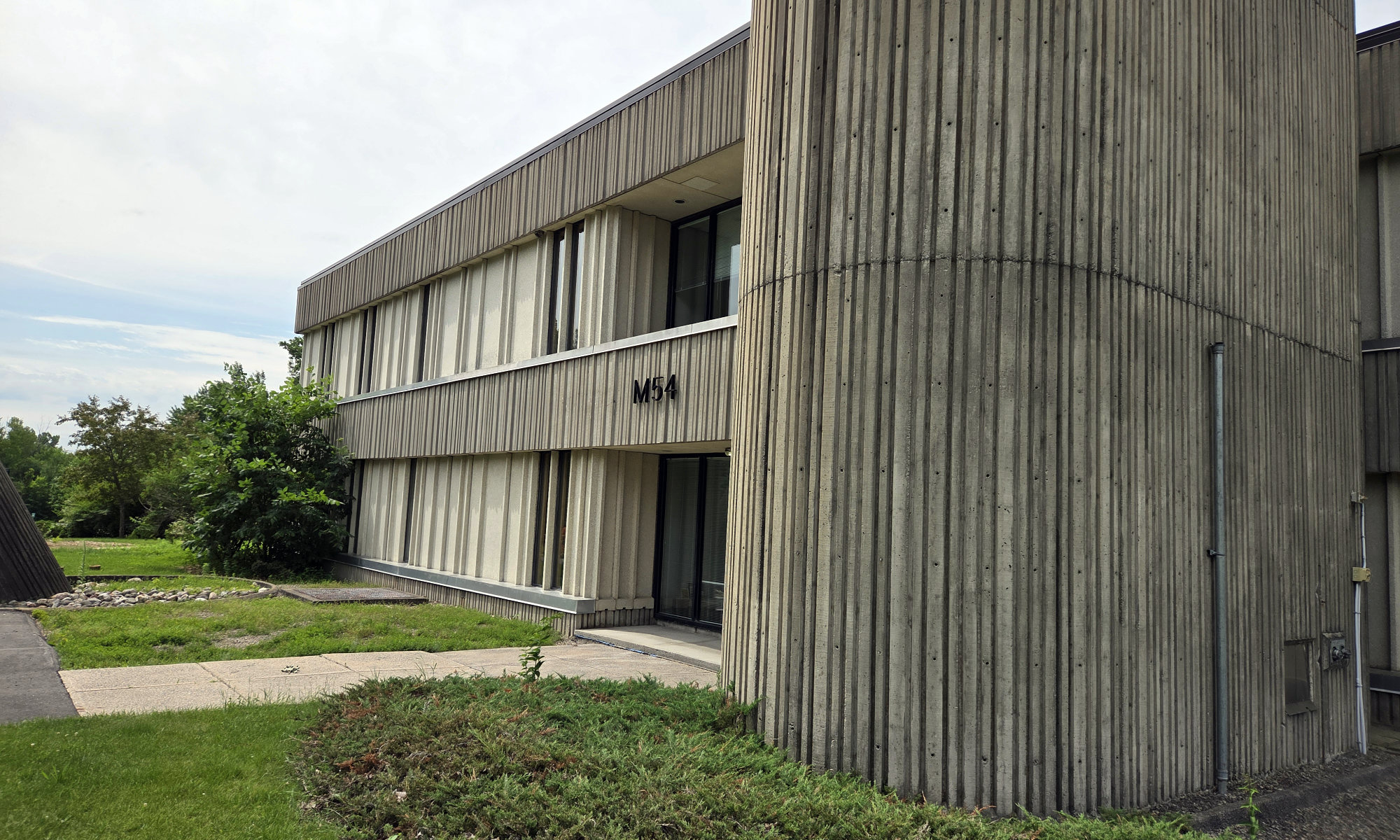
Looking across the east elevation
-
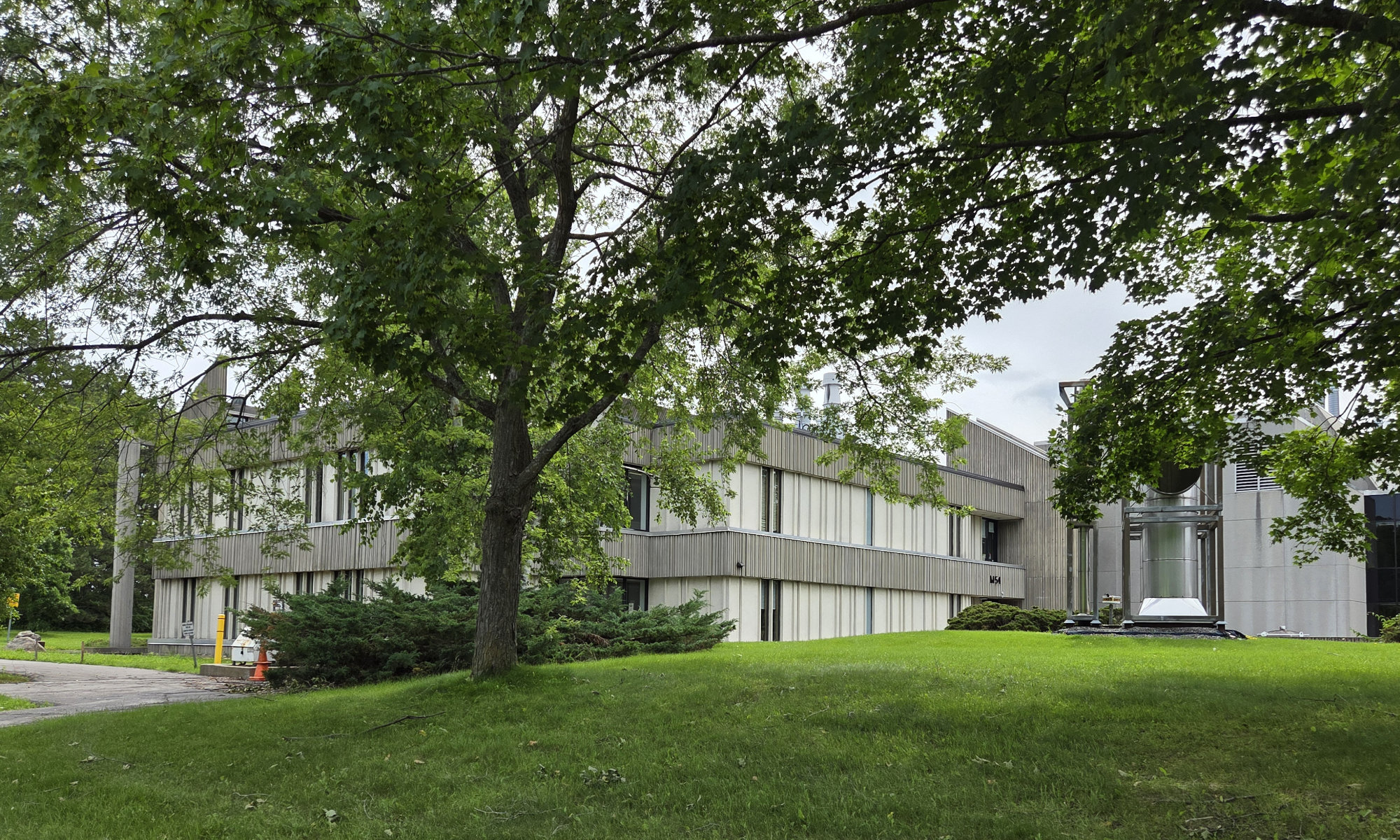
West and north elevations
-
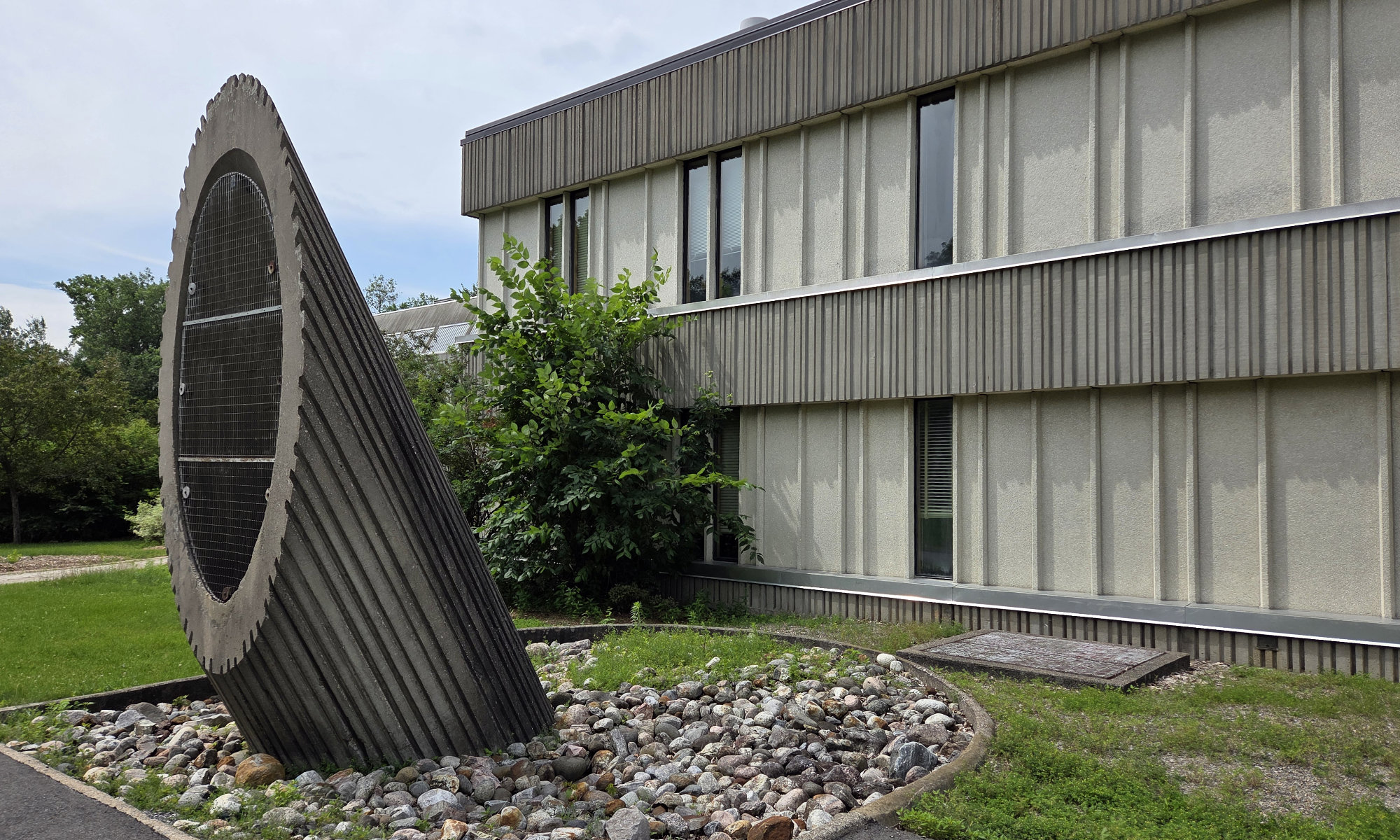
Looking towards the south end of the east elevation
-
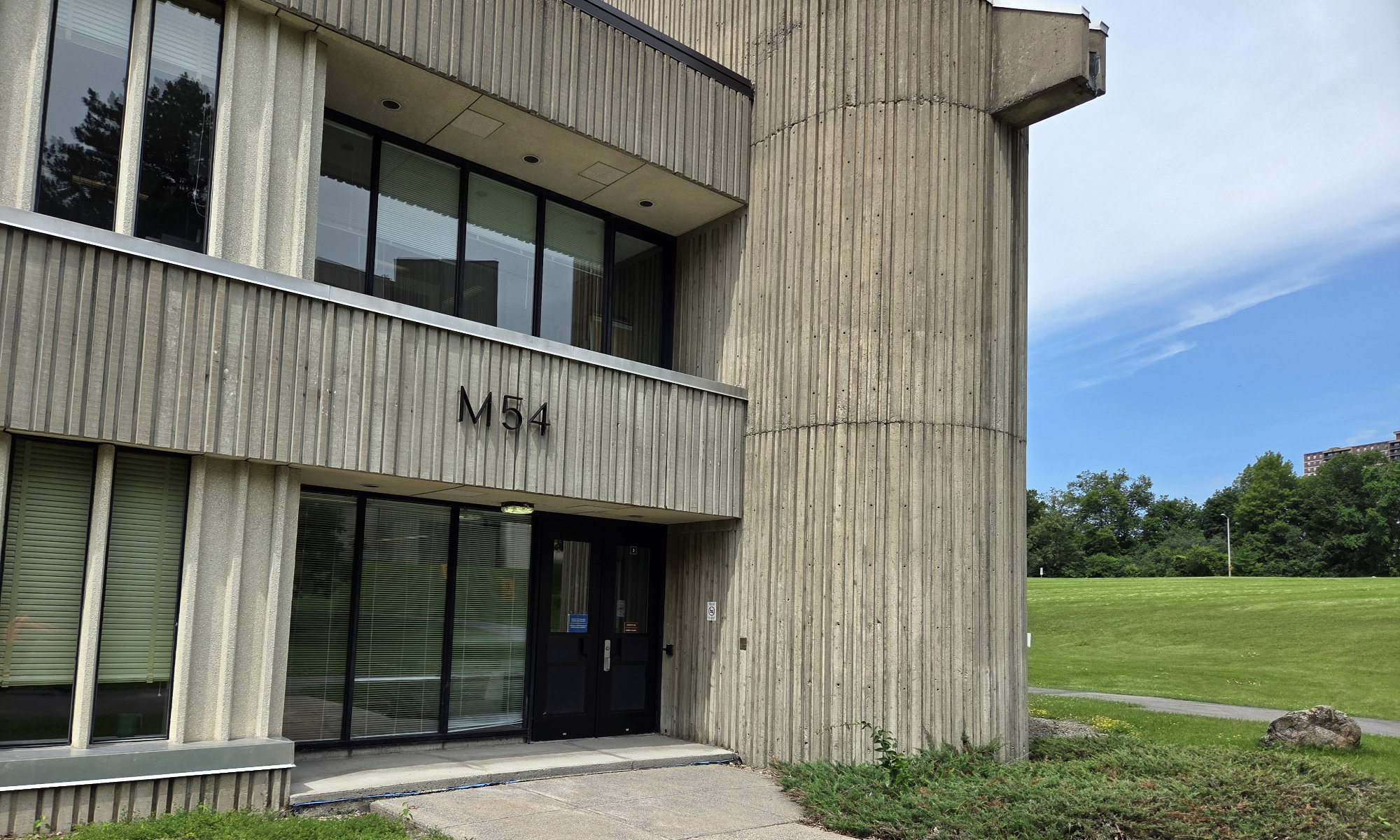
Main entrance at the northeast corner of the building
-
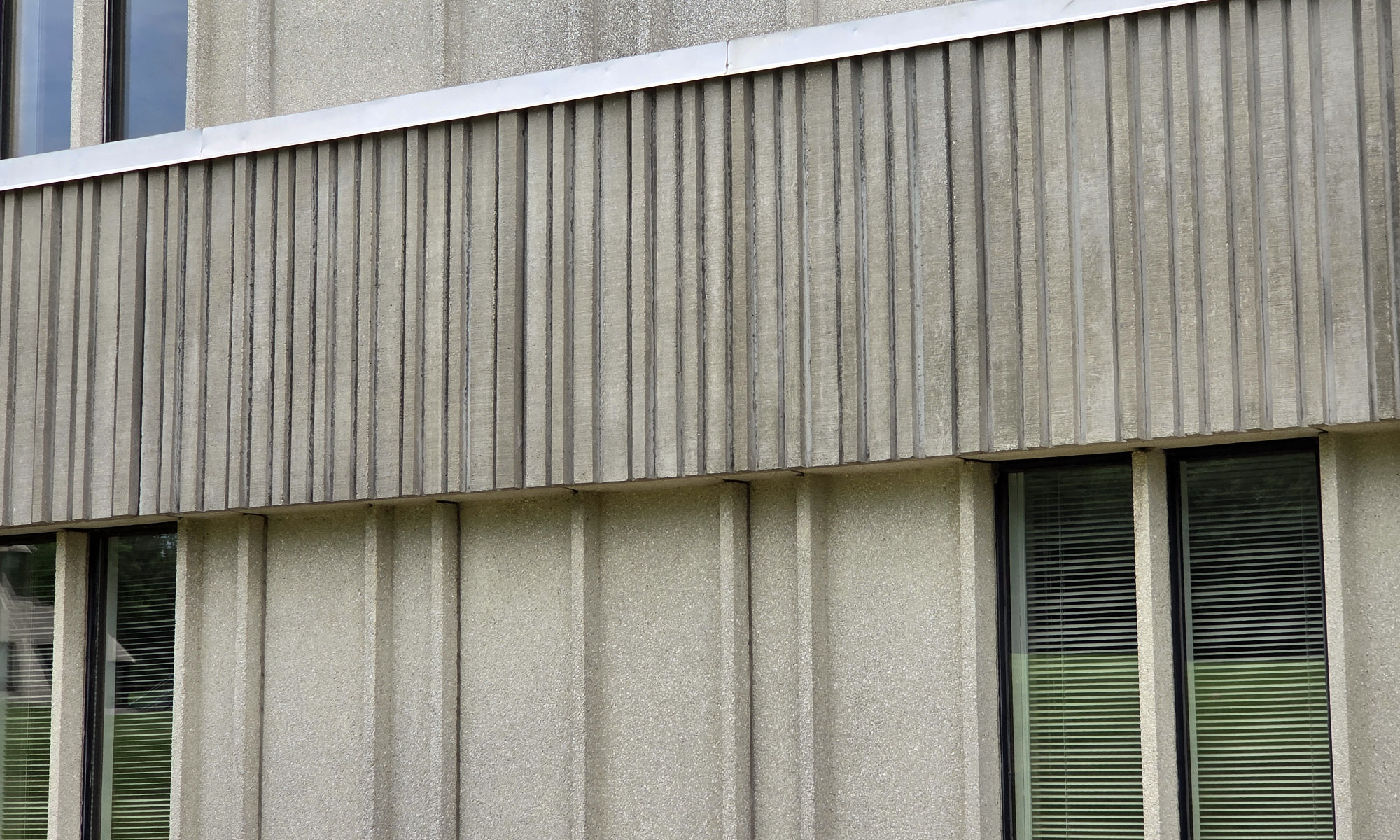
Different concrete textures on the north elevation
-
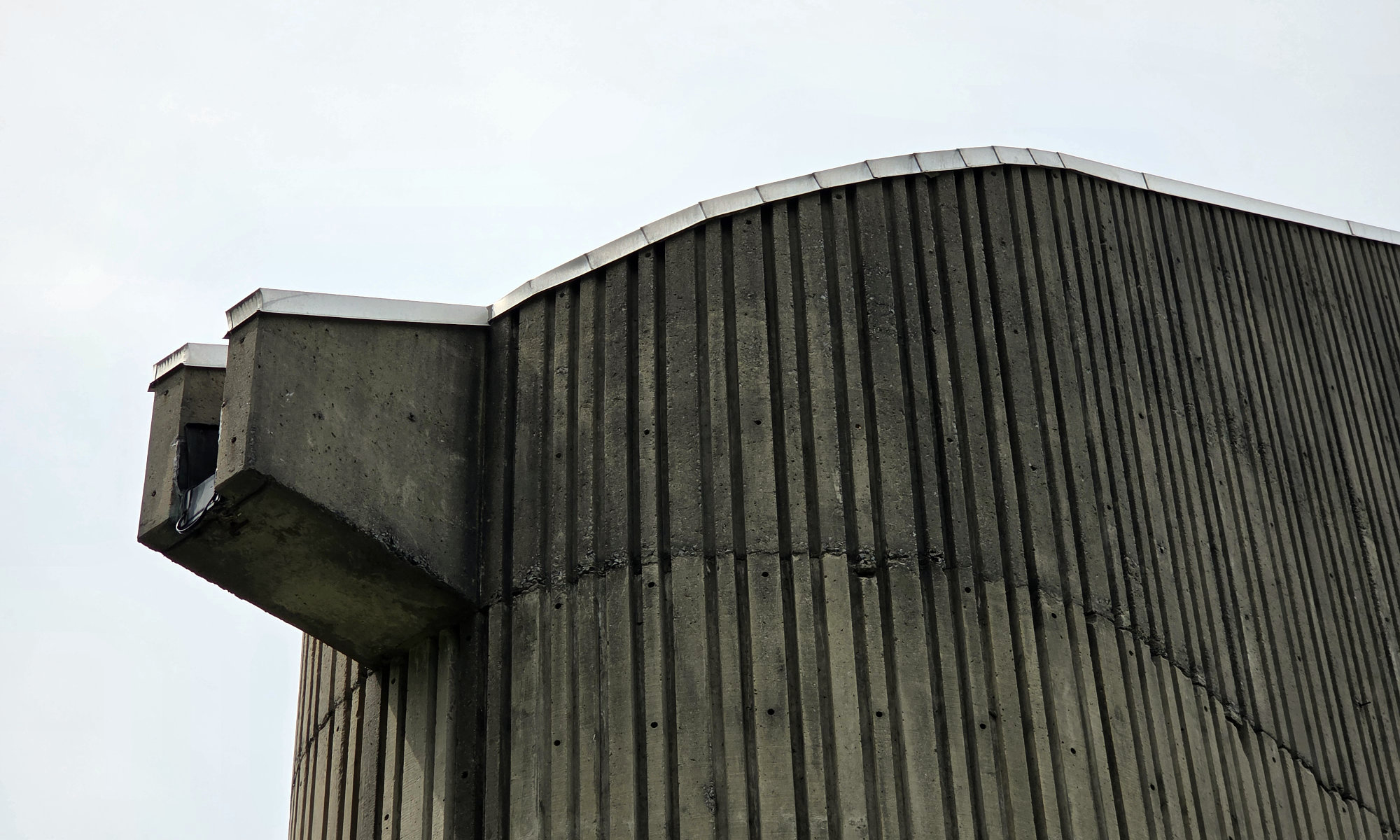
Expressive pressence of the northeast stairwell
-
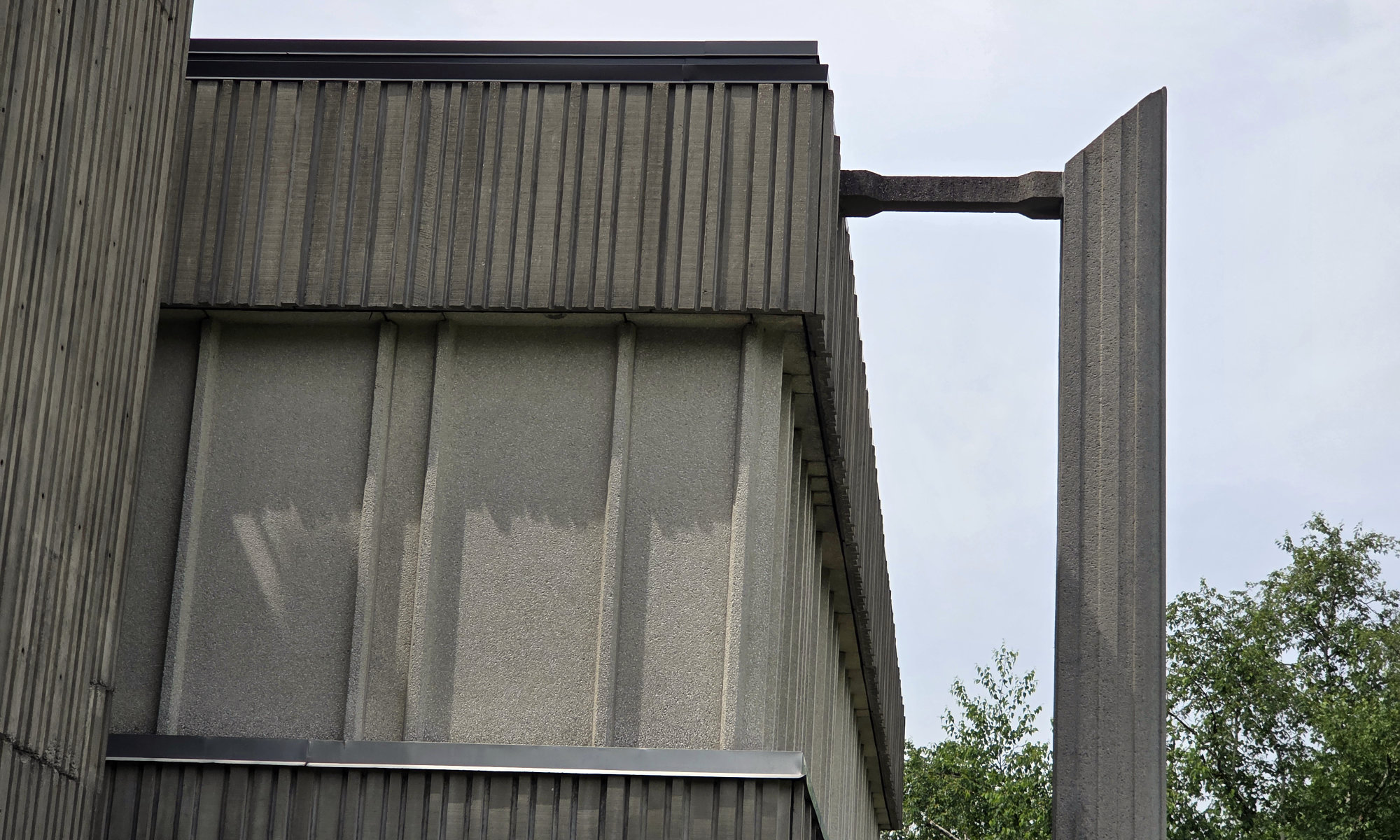
Mixture of concrete textures at the northeast corner of the building
1200 Montreal Road M54, Ottawa, ON
National Research Council
Ottawa Inner Urban
Research
1970
Building M54 is a modest two-storey research building whose restrained modern architecture gives practical form to the work of the National Research Council. Its elevations combine ribbed, white-aggregate precast-concrete panels that emphasize verticality within the limited window areas with horizontal bands of board-formed, cast-in-place concrete. The careful contrast of texture, colour, and orientation brings variety to an otherwise compact and severe composition. Against this disciplined architectural backdrop, the rounded concrete stairwell and nearby angled exhaust become especially expressive. The stairwell’s curved form and sloping top, paired with the exhaust’s emphatic angle, introduce an almost playful character when viewed in context. A companion stairwell marks the opposite corner of the building, extending this subtle play of sculptural concrete forms across the composition. Together, these unusual elements animate the building and provide a measured counterpoint to its otherwise sober and functional expression.
Located immediately west of the NRC Library, Building M54 forms a complementary part of the campus setting. Its proximity to the library reinforces the relationship between scientific research and access to shared knowledge, while its low scale and restrained materials allow it to remain distinct yet connected to its neighbour. Set within an open lawn, the building sits quietly in the surrounding landscape. Its horizontal massing, limited openings, and pale concrete surfaces give it a composed presence that supports the larger campus ensemble rather than competing with it.