What the James Strutt Designations Reveal About Modern Heritage
Mod Blog
Chris Warden
Ottawa’s decision to designate five James Strutt buildings is notable not only for the properties themselves, but for what it suggests about how the city can identify, understand and protect modern heritage. Taken together, the selected churches and houses point to the value of a theme-based approach to designation and to broader recognition of postwar architecture across the National Capital Region.
Reading the Designations as a Group
Ottawa’s recent decision to designate five buildings by architect James Strutt matters not only because of the individual merit of the properties selected, but because it points to the value of a theme-based approach to heritage planning. Rather than assessing buildings one by one, the City’s review considered a broader body of work and used that framework to identify a representative group of places that speak to larger architectural, urban and cultural themes. This approach can make modern heritage easier to understand by allowing individual buildings to be read as part of a wider story about postwar growth, changing communities and the evolution of architectural expression.
That broader perspective is especially helpful here because James Strutt occupies a distinctive place in the National Capital Region’s architectural history. He is known for his willingness to experiment with geometry, structure and roof form, and many of his buildings still stand out for their sculptural presence and spatial ambition. As the City of Ottawa noted when the Built Heritage Committee approved the designations in June 2026, the five selected properties at 20 Qualicum Street, 211 Cunningham Avenue, 915 Merivale Road, 1099 Maitland Avenue and 3955 Old Richmond Road all have design value as rare, unique or representative examples of Modernist architecture in Ottawa. Taken together, they suggest both the consistency of Strutt’s design thinking and the breadth of his work across building types.
Three Churches and the Case for Modern Religious Heritage
Three of the five recommended designations are religious buildings, and together they make a strong case for greater attention to Ottawa’s postwar ecclesiastical architecture. Modern churches can be among the most expressive buildings of their era, shaped at a moment when congregations, architects and religious institutions were rethinking how worship and community life might be reflected in built form. In Strutt’s work, that openness to experimentation is particularly clear. Although each of the three churches is distinct, they share an emphasis on space, form and uplift, showing how modest materials and disciplined structural ideas could produce architecture of considerable richness.
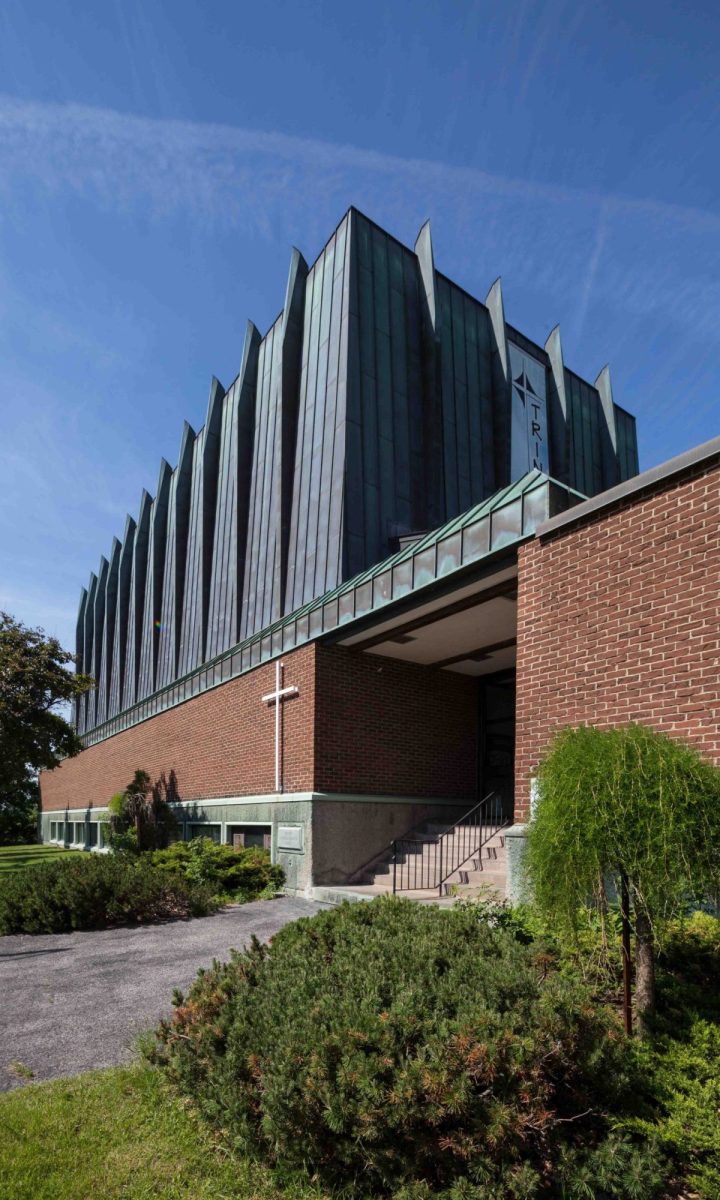
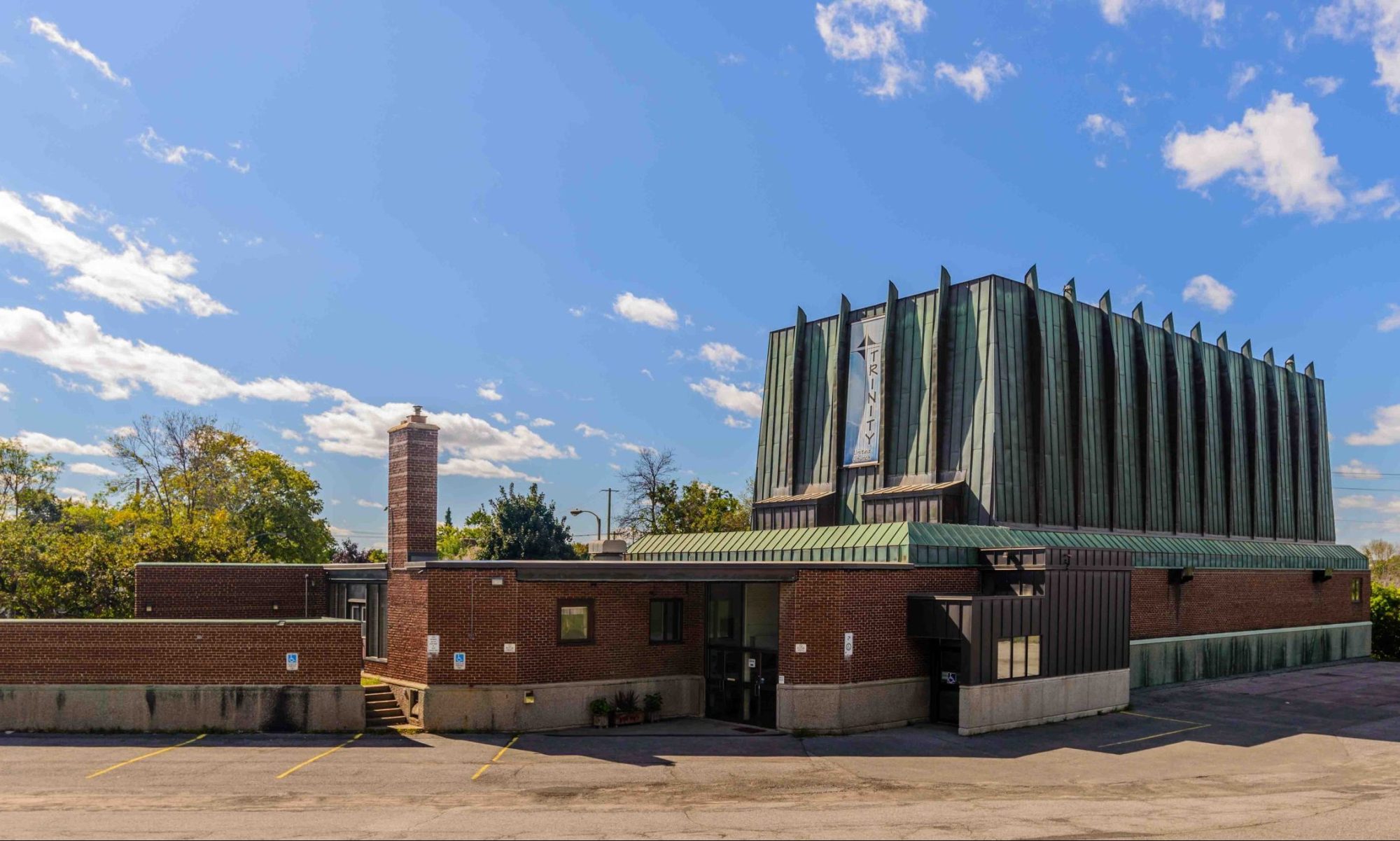
Bells Corners United Church at 3955 Old Richmond Road shows Strutt’s ability to give a relatively simple program a memorable architectural identity. Its sculptural roof form and carefully composed massing transform what might otherwise have been an ordinary suburban church into a building with real presence, linking it directly to the postwar growth of west-end communities and to the role churches once played as anchors of neighbourhood life. Trinity United Church at 1099 Maitland Avenue offers a related but distinct expression of the same concerns. There, Strutt used geometry, structure and light to create a spiritual space that feels unmistakably modern without losing the gravity and uplift long associated with ecclesiastical architecture.
Perhaps the most technically adventurous of the three is St. Teklehaimanot Ethiopian Orthodox Tewahedo Church, formerly St. Peter’s Anglican Church, at 915 Merivale Road, noted for its linked paraboloid concrete shell roof. Public reporting on the City’s designation process highlighted this roof as one of the clearest examples of Strutt’s experimental use of shape, geometry and form, helping explain why his work remains distinctive within Ottawa’s built landscape. The church’s continued religious use adds another layer of meaning. It demonstrates how Modern-era buildings can remain active and relevant even as congregations change, communities evolve and the cultural life of the city becomes more diverse. Taken together, the three churches suggest that Ottawa’s religious architecture from the Modern period may deserve more attention than it typically receives, not only for its architectural quality but for the way it records changing ideas about worship, gathering and community identity.
Modern Houses at an Intimate Scale
The other two recommended designations are single-family houses, a typology in which Strutt was equally adept. If the churches show how he worked with collective and spiritual space, the houses show how he shaped everyday domestic environments through proportion, structure and spatial clarity. The functions may differ, but the architectural thinking is clearly related: the same commitment to design quality, expressive form and the imaginative use of relatively modest materials runs through both.
The house at 211 Cunningham Avenue demonstrates how Modern residential design could be adapted to an established urban setting without losing its sense of invention. Its handling of scale, roof form and internal organization suggests a careful balance between architectural ambition and day-to-day livability, reflecting a broader mid-century interest in openness, light and a strong relationship between interior space and site. The house at 20 Qualicum Street offers a suburban counterpart. There, design ambition is expressed through bold form, disciplined detailing and an economical material palette, showing Strutt’s belief that ordinary domestic architecture could achieve distinction through space, proportion and structure rather than applied ornament, while also reflecting a respect for landscape and setting.
Seen together, these two houses reinforce the argument that residential architecture is one of the clearest ways to understand important strands of Modern design in the National Capital Region. Houses were often the place where architects could test ideas about family life, landscape, light and construction most directly, and Strutt’s work shows how much architectural quality could be achieved at that intimate scale. They also sit within a broader local context. At least one other Strutt-designed house at 395 Pleasant Park Road is already designated individually under Part IV of the Ontario Heritage Act, while another is recognized within the Briarcliffe Heritage Conservation District under Part V, suggesting that the current recommendations build on an emerging recognition of the significance of his domestic work across the city.
Why a Theme-Based Approach Matters
What makes the City’s review especially valuable is that it moves beyond the question of whether one building or another is worthy on its own. More than 30 Strutt-designed properties were reviewed by City staff, including seven churches, before this group of five was selected. That broader survey matters because it allows themes to emerge across a wider cross-section of buildings and over a longer period of architectural development. In this case, it helps clarify not only the range of Strutt’s work but also the broader trajectory of Modern architecture in Ottawa, including the different ways postwar religious and residential buildings responded to social change, suburban growth and new ideas about design. A theme-based approach also carries practical value. It can make research and evaluation more efficient by drawing on common sources, recurring histories and shared architectural questions, but its importance extends beyond that. It encourages a more coherent understanding of the built environment and makes it easier to recognize patterns of significance that might be missed when buildings are considered only one at a time.
That is why these five proposed designations should be understood as more than a one-time recognition of a prominent local architect. They offer a meaningful indication of how Ottawa might continue to evaluate modern heritage in a way that is both strategic and culturally informed. With Capital Modern now in its fifteenth year, one recurring theme has been the need to highlight both the celebrated and the vulnerable places of the Modern period so that a fuller picture of the region’s built legacy can emerge. The City should be encouraged to continue using theme-based studies as it works through the remaining properties on the Heritage Register, and to consider applying that same approach more broadly to religious architecture across Ottawa, especially buildings from the Modern era. Doing so could bring some of the city’s more distinctive and underappreciated places into clearer view while also providing a stronger foundation for how they might evolve as uses change. Many of these buildings were created to serve as collective anchors within new neighbourhoods, and that civic role still matters. Even when their original functions shift, their architectural quality, public presence and capacity for adaptation suggest that they can continue to contribute meaningfully to the life of the city over time.
Ottawa City council will vote on the designations on June 24.
Cover image provided by Rick McEwen via the Ottawa Architecture 150 Initiative.